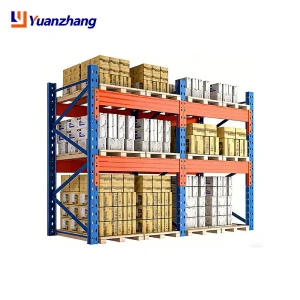
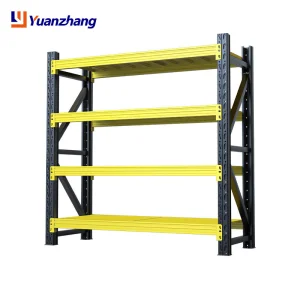
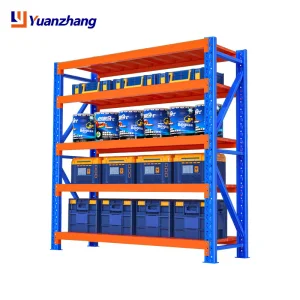
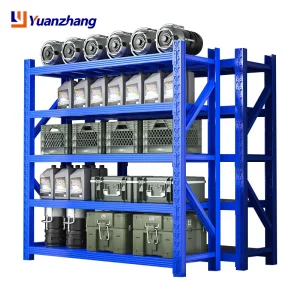
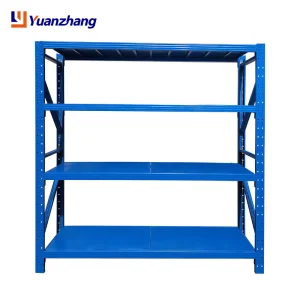
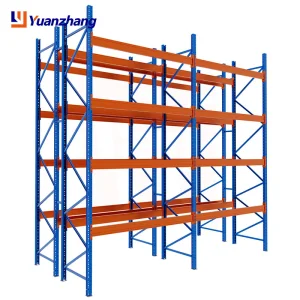
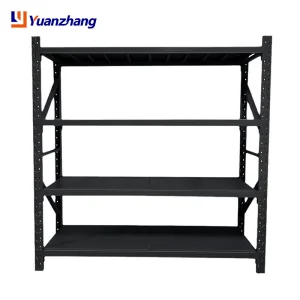
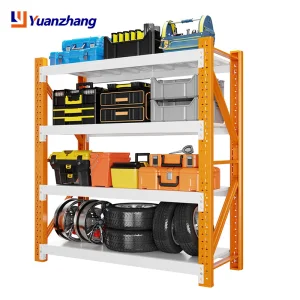
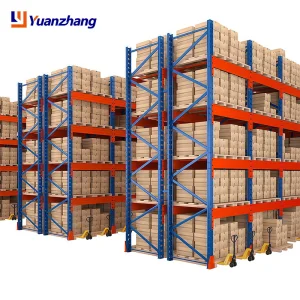
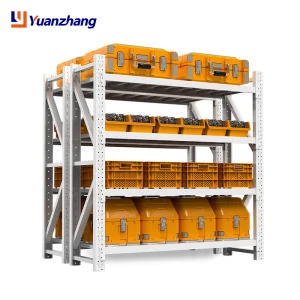
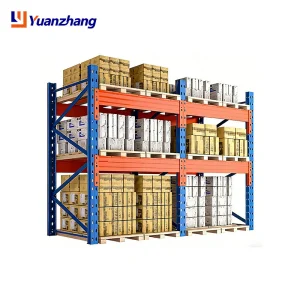
China Wholesale Steel Platforms Manufacturer & Exporter

Providing heavy-duty, modular structural steel platform solutions and heavy-duty storage systems for logistics, manufacturing, and global industrial integration.

Executive Briefing: The Architecture of Modern Industrial Steel Platforms

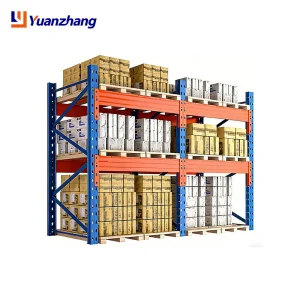
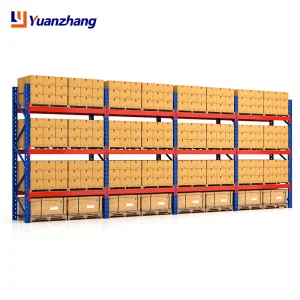
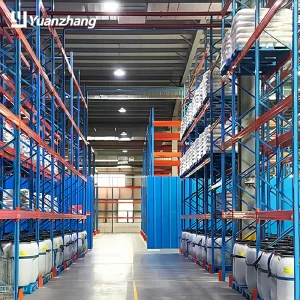
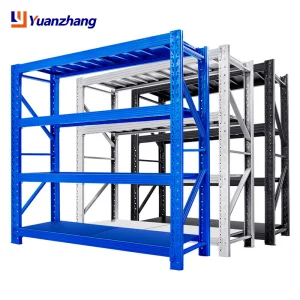
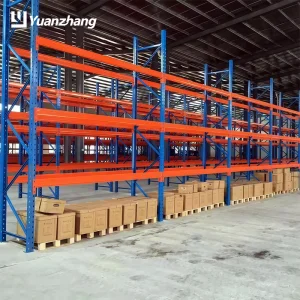
In the competitive landscapes of international logistics, automated manufacturing, and large-scale distribution, standard footprints are no longer adequate. Global supply chain strategies now prioritize spatial efficiency, cost containment, and rapid deployment. Heavy-duty structural steel platforms, custom-engineered mezzanines, and multi-tier storage racking platforms represent the most effective pathways to optimizing vertical warehouse configurations without expanding physical facility foundations.

As a prominent player in this sector, Shenzhen Yuanzhang Trading Co., Ltd. has established itself as an engineered-to-order manufacturer of customized heavy-duty warehouse racking and high-capacity steel storage platform systems. Operating with deep manufacturing integration and specialized structural engineering capabilities, our organization addresses the complex spatial challenges faced by global industrial operations, third-party logistics (3PL) centers, and manufacturing giants.

35,000 m²
Production Facility
12 Years
Industry Expertise
$28 Million
Annual Export Revenue
25 Engineers
R&D / Structural Design

Global Enterprise Procurement: Demands, Structural Standards & TCO

Global procurement directors require storage systems that deliver long-term reliability and compliance. Sourcing steel platforms from China goes beyond initial production costs; it involves verifying engineering compliance, material certification, structural reliability, and long-term total cost of ownership (TCO). Procurement managers face key considerations when selecting partners for industrial steel storage platforms:

1. Material Authenticity and Standard Conformance

The core structural integrity of any steel mezzanine platform depends on the grade of raw steel utilized. High-yield structural carbon steel (such as Q235B and Q355B) is standardized for our engineering projects. We supply certified mill testing reports (MTR) demonstrating compatibility with international equivalents like ASTM A36, ASTM A572 Grade 50, and European EN 10025 S235 & S355 structural specifications. This level of quality control ensures predictable load behaviors under high static and dynamic stresses.

2. Seismic Qualification and Structural Codes

Industrial steel platforms must be engineered to withstand site-specific seismic conditions. Projects shipped to North America, Western Europe, or seismic-prone regions in Southeast Asia require finite element analysis (FEA) modeling to simulate seismic forces. Our systems comply with the Rack Manufacturers Institute (RMI) MH16.1 specifications, American Institute of Steel Construction (AISC) design principles, and Eurocode 3 (EN 1993) design regulations, ensuring reliable performance in demanding operating environments.

Technical Insight: Load Deflection Limits

Under international building regulations, the structural deflection limit for steel platforms subjected to live loads must not exceed L/240 for standard platforms and L/360 for platforms supporting sensitive automated machinery or conveyors (where L represents the unsupported span of the structural beam). Our structural calculations incorporate these safety margins to prevent system fatigue and operational downtime.

3. Surface Treatments and Environment Adaptability

Storage platforms are frequently exposed to varied and challenging warehouse micro-climates, from high-humidity coastal zones to sub-zero cold storage facilities. We employ electrostatic thermosetting epoxy powder coatings cured between 180°C and 200°C. This process ensures an even coat thickness (70–90 microns) that prevents corrosion, chipping, and chemical wear. For highly corrosive industrial environments, we offer hot-dip galvanization conforming to ISO 1461, ensuring lasting protection and structural durability.
Macro-Industry Solutions: Structural Mezzanines in Action

Modern steel platforms serve as the structural framework for advanced logistics and industrial automation. Customized structural configurations address distinct challenges across major economic sectors:

E-Commerce & 3PL

High-density order fulfillment environments utilize multi-tier steel platforms to optimize pick modules. Designed to support integration with conveyor systems, sorting systems, and automated guided vehicles (AGVs), these platforms maximize vertical space and throughput capacity.

Heavy Manufacturing

Heavy industrial platforms require robust support configurations to handle heavy tooling, manufacturing machinery, and materials. Designed for high point-loads and dynamic damping, they protect equipment and structural integrity.

Cold Chain Logistics

Cold storage facilities operate with high energy costs per cubic meter. Multi-level steel racking systems and platforms optimize space within refrigerated envelopes. Low-temperature carbon steel is specified to prevent low-temperature brittleness.

Integrating steel platforms with material handling automation creates hybrid storage environments. Our structural layouts support heavy vertical transport systems, walk-on safety grating, fall protection handrail systems, and integrated access stairs, ensuring safe and efficient operations.

China Factory 4.0: Supply Chain Resilience & Production Flow

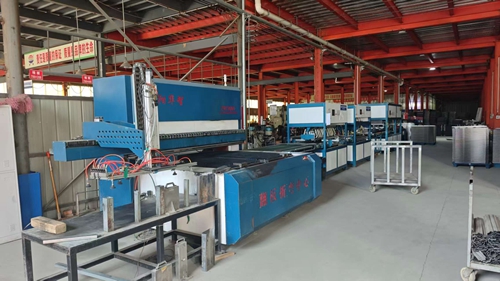
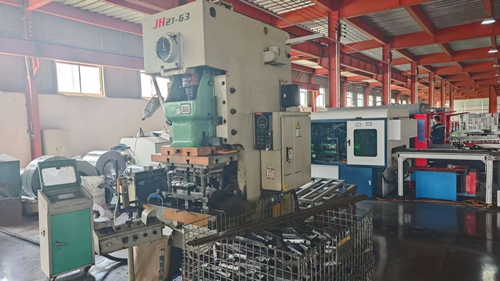
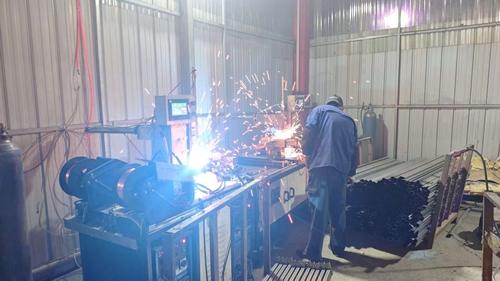
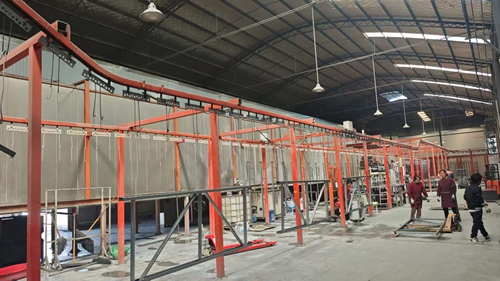
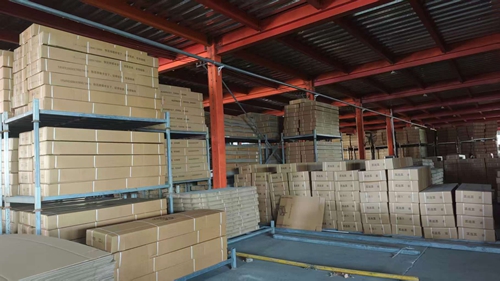
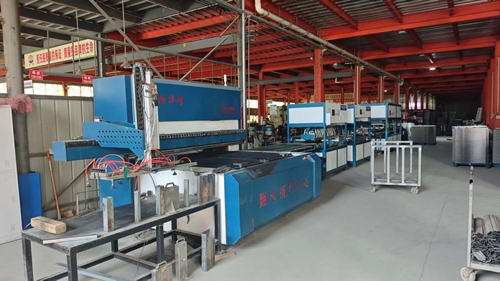
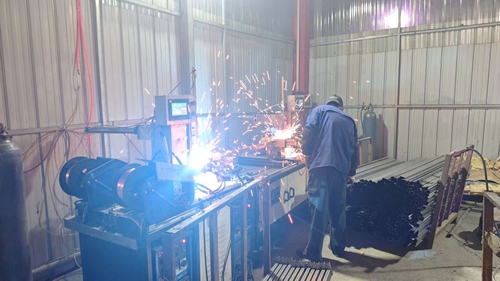
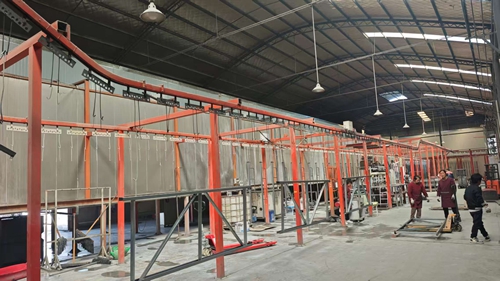
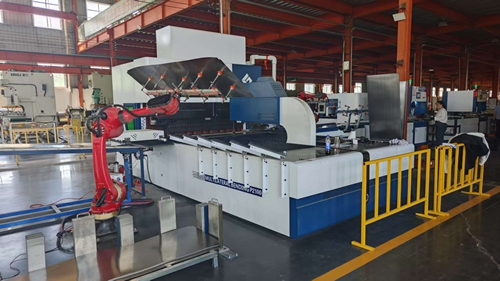
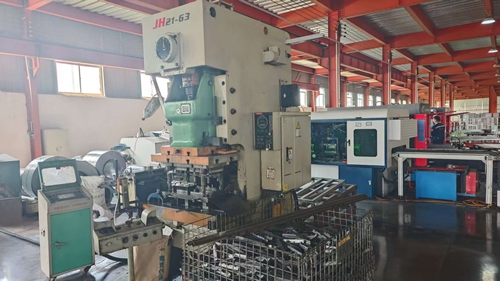
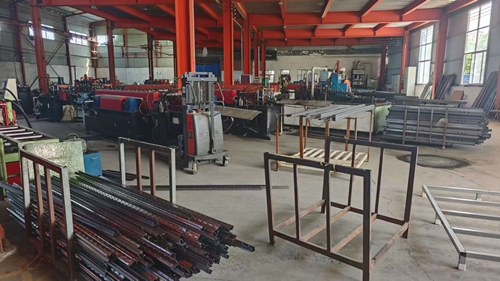
A look inside the 35,000 m² advanced manufacturing facility of Shenzhen Yuanzhang Trading Co., Ltd.

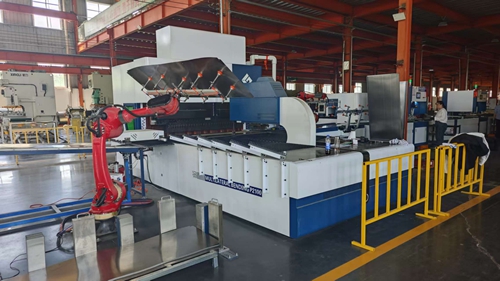
Our facility near strategic shipping hubs in southern China is engineered for high-throughput production and strict quality control. From raw material sourcing to final logistics prep, our production workflows utilize automated technology and precise fabrication methods.

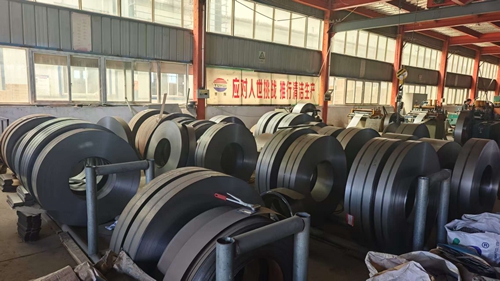
Raw material reception and mechanical testing
Raw Material
Precision laser cutting and profile separation
Cutting
Heavy structural cold pressing and forming
Pressing
Automated punching for beam connections
Punching
Robotic gas metal arc welding (GMAW)
Welding
Electrostatic powder coating process
Painting
Finished structural steel platform components ready for shipping
Finished Products
Automatic roller pressing production line
Auto Roller Pressing
Multi-axis structural welding machinery
Welding Station
Continuous curing paint line for steel racks
Curing Line
High speed automatic CNC cutting station
Auto Cutting
Heavy duty CNC punching machine
CNC Punching
High-capacity column roll forming line
Column Press Line

Rigorous QA/QC: Guaranteeing Load Capacities

To support heavy load requirements, we employ a dedicated quality assurance team of 45 QA/QC inspectors. Testing protocols include ultrasonic testing of weld joints, raw material tensile strength testing, and load-fatigue assessments. These procedures confirm that every column, beam, and connector satisfies structural requirements before export.

Technical Roadmap & Future Outlook

Industrial storage and mezzanines are evolving alongside advancements in materials science, automation, and structural engineering. Our engineering department focuses on developmental areas designed to shape the next generation of industrial steel platforms:

1. Integration of Smart IoT Structural Health Monitoring

For large-scale, multi-tier industrial platforms, real-time stress and deformation tracking is crucial. We are testing the integration of fiber-optic Bragg grating (FBG) sensors and micro-electromechanical systems (MEMS) accelerometers directly into primary load-bearing beams. These sensors provide predictive analytics for structural strain, overload warnings, and seismic impact tracking, offering operators data-driven maintenance insights.

2. Advanced Metallurgy: High-Strength, Lightweight Alloys

Advancements in steel chemistry allow for structural optimization. By incorporating ultra-high-strength steel alloys (UHSS), we can reduce structural self-weight by up to 15% while maintaining design capacity. This reduction decreases the dead load on the concrete floor, simplifies installation, and lowers shipping container shipping weights.

3. Circular Economy Design: Modular and Reusable Systems

Future industrial installations demand flexible, relocatable structures. We design bolt-together structural steel systems that eliminate field welding. This modular design permits disassembly, expansion, or reconfiguration in new facilities, aligning with sustainable construction objectives and maximizing equipment service life.

Localization Support & Compliance Assurance

Sourcing structural platforms globally requires coordination with local building authorities and structural engineers. We provide comprehensive engineering documentation to facilitate local approvals and permitting:

  • Structural Documentation: We provide detailed CAD drawings, calculation packages, and Finite Element Analysis (FEA) reports signed by qualified design engineers.
  • Building Permits: Calculations are adapted to local codes, including International Building Code (IBC) regulations, EN 1993 Eurocode standards, and regional seismic coefficients (ASCE 7).
  • On-Site Installation Assistance: Each shipped system includes step-by-step engineering documentation, visual installation manuals, and direct technical consulting support. We coordinate with local installation teams to ensure the final assembly conforms to design parameters.

Industrial Steel Platforms: Technical Q&A

Expert responses to structural questions, material specifications, and design criteria.

What are the default load capacity limitations for your custom steel platforms? +
Our systems are customized to match project requirements. Standard load designs range from light-duty storage platforms (150 kg/m² to 300 kg/m²) to heavy-duty industrial configurations (500 kg/m² to over 2,000 kg/m²). The column spacing, primary beam configurations, and floor decking type are adjusted to satisfy load specifications and structural requirements.
How do you verify structural integrity under dynamic loading or seismic stresses? +
Our design team uses advanced finite element analysis (FEA) modeling software. We simulate live loads, static loads, wind loads, and seismic forces based on geographic installation data and international building codes. High-stress points are reinforced, and connection details (such as high-tensile structural bolts) are verified to maintain design load margins.
Which decking options are available for industrial mezzanine systems? +
We provide a variety of decking options, including heavy-duty bar grating for airflow and fire protection compliance, solid steel checker plates for wear resistance, and high-density composite panels (such as resinboard or MDF) supported by corrugated steel deck profiles for smooth foot traffic and pick operations.
How does Shenzhen Yuanzhang control the quality of exported steel platforms? +
We operate a multi-stage QA/QC process. Raw steel coils are tested for chemical composition and tensile strength. Our fabrication steps use CNC punch presses and robotic welding systems to ensure tight tolerances. Finished weld lines are checked with ultrasonic scanners, and a final powder-coating thickness test is performed on every batch to protect against corrosion.
Can the platforms be modified or expanded after initial installation? +
Yes. We design our structural platforms using bolt-together connections rather than permanent field welding. This modular design allows sections to be added, reconfigured, or relocated if your storage needs or facility configurations change.