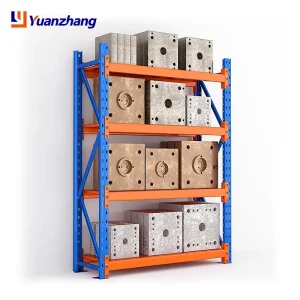
Globally, supply chain dynamics have undergone rapid structural transformations. Urban space constraints and skyrocketing land costs in North America, Western Europe, and Southeast Asia have forced material distribution centers to maximize vertical clear height. According to industrial warehouse research data, utilizing structural cantilever racking systems instead of ground stacking can increase spatial utility by up to 150% to 200%.
Furthermore, safety regulations such as OSHA in the United States and EN norms in Europe have strictly prohibited unstable structural stacking configurations. Modern warehouse managers now prioritize safety factors, structural deflection calculations, and automated system compliance over basic price metrics. High-quality cantilever systems engineered with cold-rolled or structural hot-rolled I-beams are key components of modular industrial hubs.
Under European standard EN 15512 and the American Racks Manufacturers Institute (RMI) ANSI MH16.1 specifications, cantilever design must calculate exact load curves where the ratio of deflection to arm length (L) does not exceed L/180. Using structural steels like Q235B or Q345B ensures high structural integrity and safeguards personnel.
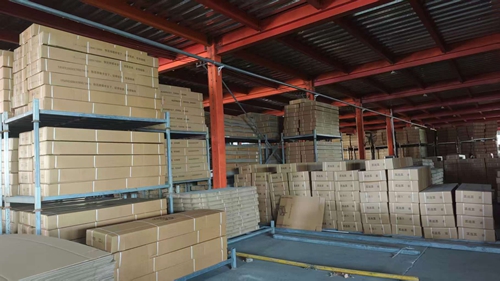
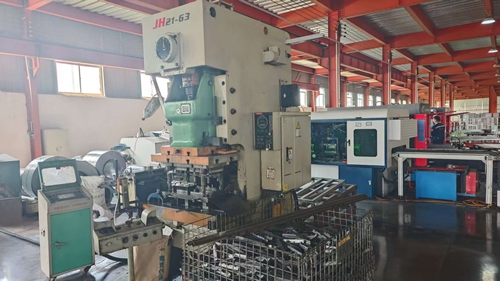
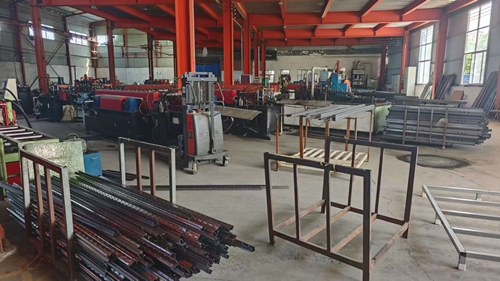
Established in 2015, Shenzhen Yuanzhang Trading Co., Ltd. is a leading manufacturer and exporter specializing in heavy-duty warehouse racking and customized industrial storage systems. Operating out of a state-of-the-art 35,000 m² production facility, we bring 12 years of deep industry expertise and 8 years of dedicated international trade experience to global logistics and commercial storage projects.
Driven by technical excellence, our operations are backed by a robust research and development center staffed with 25 expert R&D engineers. Demonstrating our strong commitment to innovation, we launched over 150 new storage solutions last year alone. We offer fully versatile OEM/ODM custom options, including specialized dimensions, weight capacity adjustments, surface coatings, and modular structural designs to meet diverse client requirements.
Quality and reliability form the foundation of our business. We enforce strict multi-stage quality control—utilizing advanced automated ultrasonic testing, raw material stress analysis, and load-bearing fatigue assessments executed by a dedicated team of 45 QA/QC inspectors.
With annual export revenue reaching $28 million USD and a resilient global supply chain network of over 800 strategic raw material and component partners, we maintain steady delivery timelines worldwide. Our primary export markets span North America, Western Europe, Southeast Asia, and the Middle East. We proudly serve a diverse spectrum of global clients, ranging from large-scale third-party logistics (3PL) providers and industrial distributors to commercial warehouse developers and retail chain enterprises.
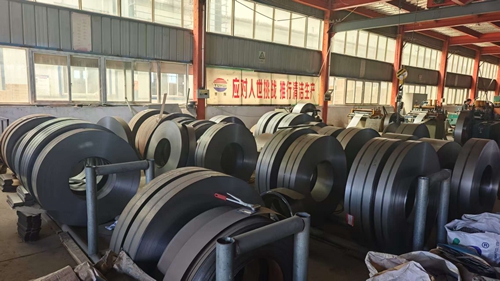
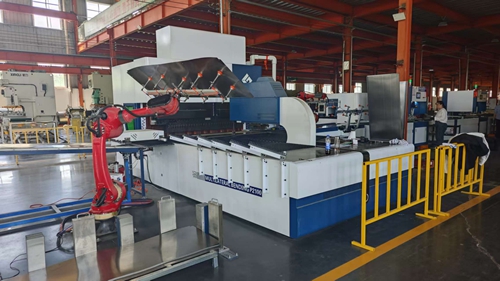
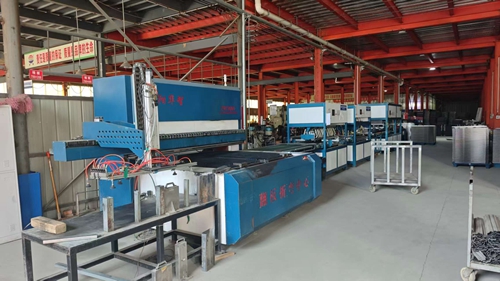
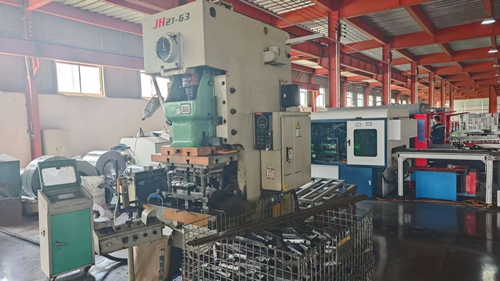
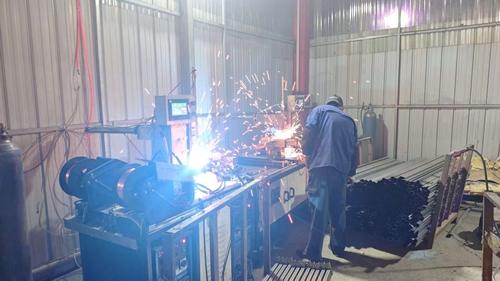
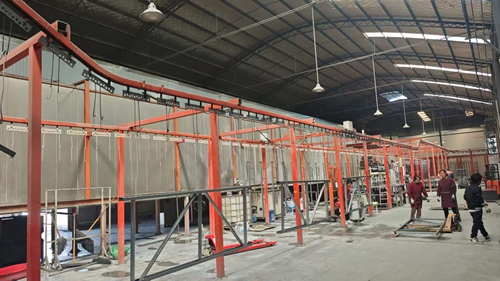
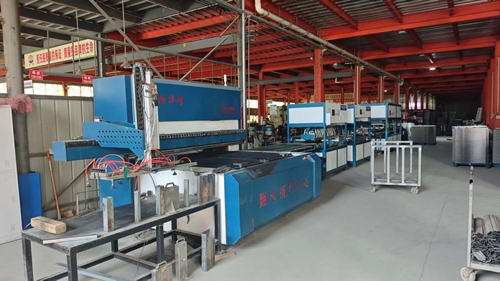
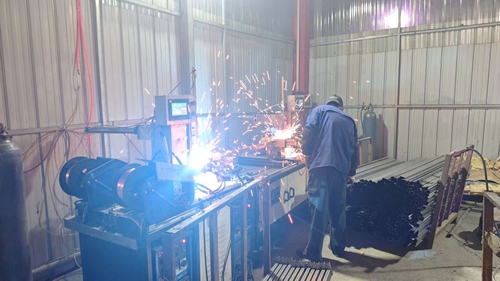
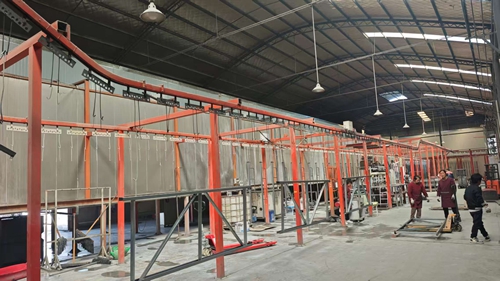
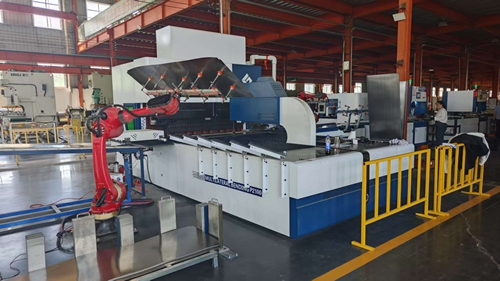
From heavy-duty sheet raw material analysis to final precision thermal-powder curing, our 35,000 m² factory operates automated lines ensuring sub-millimeter tolerances on all structural uprights and cantilever components.
Optimized for North American lumber yards storing long bundles of timber. Features dynamic weather-resistant structural hot-dip galvanization to withstand harsh outdoor elements without structural rust or degradation.
Perfect for steel distribution hubs. Features load capacities up to 5,000 kg per level, equipped with safety end-stops and structural base weldments to prevent cylindrical products from rolling off.
Designed for manufacturing facilities needing quick crane access to tooling shafts, structural plates, and bulky engine parts. Maximizes forklift accessibility and keeps manufacturing floors hazard-free.
The industrial storage industry is undergoing a digital revolution. Static cantilever racks are transitioning into Dynamic Automated Storage and Retrieval Systems (AS/RS). By integrating automated robotic cranes, warehouses can retrieve pipes and heavy plates with computerized precision, eliminating human operational errors and reducing forklift usage.
Additionally, modern structural engineering integrates seismic protection mechanisms. Through finite element analysis (FEA), our R&D team optimizes structural joint ductility, ensuring our racks perform under load configurations even in seismic zones (conforming to RMI structural codes).
| Structural Profile | Load Capacity | Best Applied Scenarios |
|---|---|---|
| Roll-Formed Steel | 300 - 1,500 kg / Arm | Light-to-medium pipes, plastic tubes, light profiles |
| Structural I-Beam | 1,000 - 5,000+ kg / Arm | Heavy steel plates, structural timber, machinery molds |
| Hot-Dip Galvanized | Varies by structure | Outdoor storage, chemical yards, cold storage |
Calculate load distribution: are you storing uniformly distributed loads (UDL) or point loads? Uniformly distributed loads reduce stress concentrations on the arm welds, allowing higher loading configurations. Always design for the maximum possible loading event.
Cantilever racks rely heavily on anchor connections. Verify if your facility floor has the necessary concrete depth and compression strength (minimum 3,000 PSI) to handle base-plate tension under maximum upright deflection.
Cantilever racks eliminate front upright column obstructions. This linear configuration allows continuous loading of long, non-standard items like lumber, piping, and sheet metals, which cannot fit inside the fixed bays of standard pallet racks.
We primarily utilize high-tensile structural steel grades Q235B and Q345B. Q345B provides higher yield strength for heavy loads and high-stress environments, ensuring the safety of your warehouse operations.
Arm capacity is calculated using the formula for a cantilever beam under bending stress, taking into account load distribution, arm length, steel profile, and yield strength. Our R&D team uses FEA (Finite Element Analysis) software to verify capacity limits.
We support standard upright pitches of 50mm, 75mm, and 76.2mm (3 inches). This allows operators to easily adjust arm heights to adapt to changing inventory profiles.
Yes, we provide full OEM/ODM options. Our team of 25 R&D engineers can design racking systems to your exact specifications, including seismic configurations, dynamic base sizes, and custom colors.
Our automated electrostatic powder-coating line applies a uniform cured layer of 80 to 110 microns. This ensures superior resistance to impact, scratches, and chemical wear.
Our 45 QA/QC inspectors conduct multi-stage quality control, including ultrasonic weld testing, steel stress fatigue analysis, dimensional verification, and powder-coating adhesion tests.
Yes, we engineer seismic-resistant racking systems. By increasing baseplate dimensions, adding dynamic bracing, and using high-yield structural steel, our designs comply with RMI and seismic safety requirements.
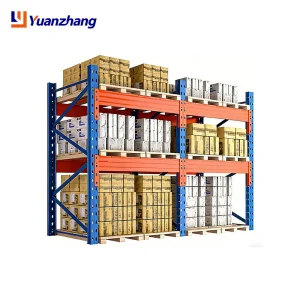
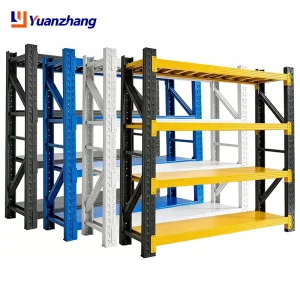
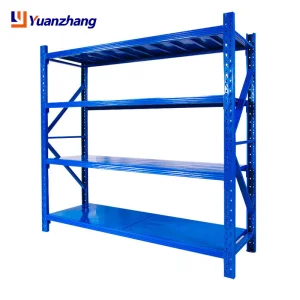
 Yuanzhang Rack