Wire Shelving is an open-frame storage system made from metal wires arranged into shelves, usually supported by upright posts. You may have seen it in a pantry, garage, stockroom, or restaurant kitchen. The open grid makes stored items easy to see and allows air to circulate. That can help with everyday organization, though it is not ideal for every item. Small containers may wobble or tip unless you add shelf liners.
People choose wire shelving because it can be adjusted, assembled in different configurations, and used in spaces where solid cabinets feel bulky. Common uses include storing pantry goods, tools, cleaning supplies, folded linens, and inventory. Still, “strong” is not a universal rating. Capacity varies by product, shelf size, materials, and how weight is distributed. Check the manufacturer’s specifications, assemble the unit as directed, and place heavier items on lower shelves. It depends.
A practical choice starts with the items you need to store and the space available. Measure doorways and ceiling height, then consider moisture, cleaning needs, and whether objects might slip through the grid. I used to think open shelves simply made storage easier; the gaps can also create extra work. This guide explains what wire shelving is, how its parts work, and where it can be useful, so you can judge whether it fits your room and routine.
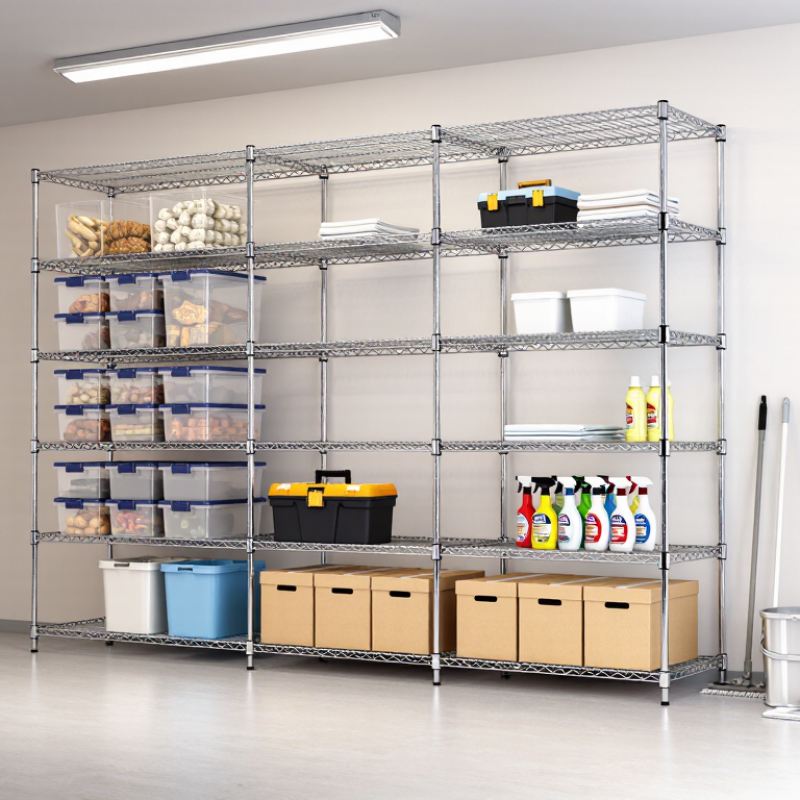
Wire shelving is a storage system made from metal posts and shelves formed by intersecting wires. Its open-grid design leaves gaps between the wires instead of creating a solid surface. Items rest on the grid, while air and light can pass through it. Simple, but not effortless.
That openness helps users spot stored goods from several angles and can support ventilation around items. It may also let dust fall through, so the floor beneath still needs attention. Shelves are commonly used in pantries, stockrooms, workshops, and commercial storage areas. Their practical value is clear: a worker can identify a carton without pulling out everything nearby. The U.S. Census Bureau reported that e-commerce represented 15.4% of U.S. retail sales in 2023, in its Quarterly Retail E-Commerce Sales report. That figure reflects a fast-moving retail environment, where visible, accessible storage can be useful.
The grid does not distribute every load evenly by itself. Heavy containers should sit near the posts, and shelf capacity must match the manufacturer’s stated rating. Small objects may wobble or slip through wider openings. Add a suitable liner when needed, but remember that liners reduce some airflow. Open shelves are not a cure-all. Their performance depends on spacing, installation, load placement, and the goods being stored. A neat-looking rack can still be poorly loaded.
Wire shelving uses a metal grid instead of a solid shelf surface. Its open design allows airflow and light to pass through and makes stored items easier to see.
Example grid geometry: The chart estimates open area for square grids made with 3 mm wires at the listed center-to-center pitches. Larger pitches leave more open space. These are illustrative calculations, not product specifications; actual wire shelving varies.
What Is Wire Shelving and What Is It Used For?
Wire shelving uses open-grid shelves supported by vertical posts. Common materials include chrome-plated steel, zinc-coated steel, and polymer-coated steel. Stainless steel is often chosen for damp or washdown areas. A typical unit includes uprights, shelves, clips or split sleeves, leveling feet, and sometimes casters. The clips lock shelves at chosen heights, but uneven placement can make a rack wobble. Fit matters.
Configurations range from freestanding units to wall-mounted shelves and mobile carts. Narrow, tall racks suit tight stockrooms; wider shelves hold bulky containers. Open wires allow air and light to pass through, while solid liners help keep small items from slipping. Check the rated load and whether it applies per shelf or to the whole unit. The World Steel Association’s 2023 sustainability indicators report estimates that about 630 million tonnes of steel scrap are recycled annually worldwide. That figure concerns steel broadly, not shelving alone, but it shows why steel’s recyclability matters when selecting durable storage.
Tips: Measure the doorway, floor space, and tallest stored item before choosing a configuration. Level the feet on uneven floors, and place heavier loads on lower shelves. Casters are handy, though a fully loaded cart may be harder to steer than expected.
Wire shelving is a system of metal posts and open-grid shelves used to store supplies in kitchens, stockrooms, garages, and warehouses. Its open construction lets light and air pass through, and staff can spot misplaced items without pulling out a solid drawer. The FDA’s 2022 Food Code says food generally should be stored at least 6 inches (15 cm) above the floor. Shelving can help maintain that clearance in dry storage areas. That helps.
The main advantages are visibility, adjustable shelf heights, and relatively easy cleaning. A worker can raise one shelf to fit tall cartons, then place small bins above everyday tools. But the grid has trade-offs. Tiny parts may slip through, and dust can settle on the wires. A damp room may also require corrosion-resistant finishes; “metal” alone does not mean rust-proof. Not always.
Load capacity is a practical limit, not a universal feature. Ratings depend on shelf span, post design, and how evenly weight is distributed. Heavy boxes concentrated in one corner can stress a shelf even when the total load seems modest. OSHA’s 29 CFR 1910.176(b) requires stored materials to remain stable and secure, reinforcing the need to follow rated capacities and avoid unstable stacks. I would check the manufacturer’s load label before loading, and recheck it after changing the shelf layout.
Wire shelving is common in distribution centers, retail stockrooms, kitchens, clinics, garages, and laundry rooms. Its open grid lets staff see labels and check stock without moving every box. In warehouses, shelves can hold cartons, bins, and lightweight supplies near packing stations. The U.S. Census Bureau reported that U.S. retail e-commerce sales reached $1.192 trillion in 2024, or 16.1% of total retail sales. That figure helps explain why accessible storage matters in fulfillment areas, though it does not measure wire-shelving use directly.
Food businesses often use wire racks in dry stores and walk-in coolers, where air can circulate around containers. USDA Economic Research Service data put U.S. at-home food spending above $1 trillion in 2023, reflecting the scale of grocery supply and storage. In clinics, wire shelves can separate labeled supplies from floor-level cleaning equipment. At home, they suit pantries, basements, and garages, especially where damp air makes stagnant corners a concern. Easy to inspect. But they are not ideal for every item: small parts may slip through the grid, and unsuitable coatings can corrode in harsh conditions. Check the rated load, shelf spacing, and cleaning requirements before installation; a rack that looks sturdy can still sag when weight is concentrated in one spot.
Choosing wire shelving starts with the space, not the catalogue. Measure clear width, depth, ceiling height, door swings, and the route people or carts use. Then list stored items by size, weight, turnover, and environment. Small parts need tighter shelf spacing or bins; tall cartons need adjustable levels. Damp rooms may call for corrosion-resistant finishes, while dry stockrooms may not. Check the rated load per shelf and per unit, and follow the stated load distribution. Numbers matter. Never treat a rating as permission to load one corner heavily. Open-wire shelves improve visibility and airflow, but small items can fall through; use liners or bins when needed.
BLS recorded 2.6 million nonfatal injury and illness cases in private industry in 2023, according to its Survey of Occupational Injuries and Illnesses. That figure is not shelving-specific, but it underscores why access and handling deserve attention. Keep daily-use goods within easy reach, and reserve upper levels for light, occasional stock. An adjustable unit can suit changing inventory; a fixed, narrow bay may use floor space better in a tight closet. Leave room for future changes. Plans rarely stay perfect. Before installation, confirm floor capacity, clearances, and any site-specific safety requirements with a qualified professional.
| Space or Use | Typical Items | Useful Wire Shelving Features | How to Choose | Practical Considerations |
|---|---|---|---|---|
| Pantry and kitchen storage | Dry goods, cookware, containers, and small appliances | Adjustable shelf heights; open construction for visibility and airflow | Measure the available width, depth, and height. Choose shelf spacing that accommodates the tallest frequently stored items. | Use shelf liners where small containers might tip or sit unevenly. Keep heavy items on lower shelves. |
| Closets and laundry areas | Clothing, linens, towels, baskets, and cleaning supplies | Multiple shelf levels; optional hanging components on compatible systems | Consider whether the storage needs are mostly folded items, hanging garments, or a combination. Check wall and floor space before selecting a layout. | Open shelves allow air circulation but may not keep dust off stored items as well as enclosed storage. |
| Garage and utility storage | Tools, hardware, sports equipment, and household supplies | Freestanding or wall-mounted configurations; shelves that can be repositioned | Match the system to the size and weight of the items. Check the specified capacity for each shelf and for the entire unit. | Load limits vary by product and setup. Install and load the system according to its instructions, and secure it if required. |
| Retail or stockroom organization | Packaged goods, inventory bins, and supplies | Adjustable levels; open access from different sides on suitable freestanding units | Plan shelf spacing around package dimensions and the way items will be picked or replenished. Allow clear access to aisles and exits. | Label shelves or bins to support consistent organization. Avoid protruding loads that could obstruct walkways. |
| Office and supply storage | Paper, folders, equipment, and shared supplies | Open shelves for quick access; adjustable spacing for different supply sizes | Measure the footprint and check that shelves will fit the room’s access routes. Choose a depth that keeps stored items within easy reach. | Distribute weight evenly across each shelf and place heavier supplies lower down for easier, safer access. |
| Bathrooms and damp areas | Towels, toiletries, and laundry supplies | Open construction that allows air to circulate around stored items | Check the material and finish for suitability in the intended environment, and make sure the unit fits without blocking ventilation or access. | Wire construction does not make every system rustproof. Follow care instructions and keep the unit within its stated environmental limits. |
| Choosing a system for any space | Items of varying sizes, weights, and access frequency | Freestanding, wall-mounted, or mobile designs; adjustable shelves on many models | Measure the space, list what will be stored, estimate item sizes and weights, and decide whether the shelves need to move or remain fixed. | Confirm dimensions, assembly requirements, compatible accessories, and load ratings before purchase. Do not exceed stated limits. |
It uses metal posts and shelves made from intersecting wires. The open grid lets light and air pass through.
Common options include chrome-plated, zinc-coated, polymer-coated, and stainless steel. Stainless steel often suits damp areas. Conditions matter.
Cartons, bins, kitchen supplies, and garage equipment often fit well. Labels stay visible from different angles.
They may wobble or slip through wider gaps. Use a suitable liner when needed, though it reduces airflow.
Put heavier containers near the posts and on lower shelves. Check whether the rated capacity applies per shelf or to the whole unit.
Measure the floor space, doorway, and tallest stored item. A rack that fits the room may still not fit through the door.
They help move carts between work areas. A fully loaded cart can be harder to steer than expected.
Not necessarily. Dust can fall through the grid, so clean the floor beneath it. A tidy rack can still hide a dusty corner.
It appears in stockrooms, kitchens, clinics, garages, laundry rooms, and pantries. Choose coatings and spacing for the stored goods and conditions.
Wire Shelving is a storage system made from metal shelves formed into an open grid and supported by upright posts. Its design allows air and light to pass through, makes stored items easy to see, and can help reduce dust buildup compared with solid shelves. Systems commonly include shelves, posts, connectors, and optional accessories, with different materials, finishes, sizes, and adjustable configurations to suit varied spaces.
The open structure and flexible layout make Wire Shelving useful in homes, offices, storerooms, and other organized work areas. It is generally easy to assemble and adapt, though the grid may not suit very small items without liners, and capacity depends on the system’s construction and setup. When choosing a system, consider the available floor space, shelf dimensions, expected load, item sizes, environmental conditions, and whether adjustability or accessories are needed. These factors help ensure the shelving is practical, stable, and suited to everyday storage needs.

Yuanzhang Rack