Medium Duty Storage sits between light shelving and heavy pallet racking, serving warehouses, workshops, archives, and retail backrooms. It supports products that require more strength than cartons but less capacity than full pallet loads. Common systems include boltless shelving, longspan shelving, carton flow racks, mobile shelving, and small-parts cabinets. Each option changes how workers pick, replenish, and inspect inventory.
Industry evidence supports a more practical approach. The MHI 2024 Annual Industry Report highlights continued investment in warehouse technology, labor productivity, and adaptable operations. The 2024 CBRE Global Industrial and Logistics Occupier Survey also emphasizes efficiency, space utilization, and resilient facility planning. These findings matter because a storage system is not only a steel structure. It affects walking distance, picking accuracy, aisle safety, and future expansion.
A well-designed Medium Duty Storage layout might place fast-moving cartons on waist-height shelves, with labeled bins below and reserve stock above. Carton flow lanes can improve first-in, first-out handling for dated products. Mobile shelving may recover floor space, but it can slow access during busy periods. Longspan shelving offers flexibility, though unsupported spans may sag when loading practices are poor. That detail is often overlooked.
There is no universal winner. The best choice depends on load weight, product dimensions, turnover rate, ceiling height, and handling equipment. Facility managers should verify manufacturer load ratings and local safety requirements before installation. Even experienced teams can misjudge growth. A small pilot bay, measured for access time and damage rates, may reveal more than a polished spreadsheet. This guide examines the top types of Medium Duty Storage and the conditions where each system performs best.
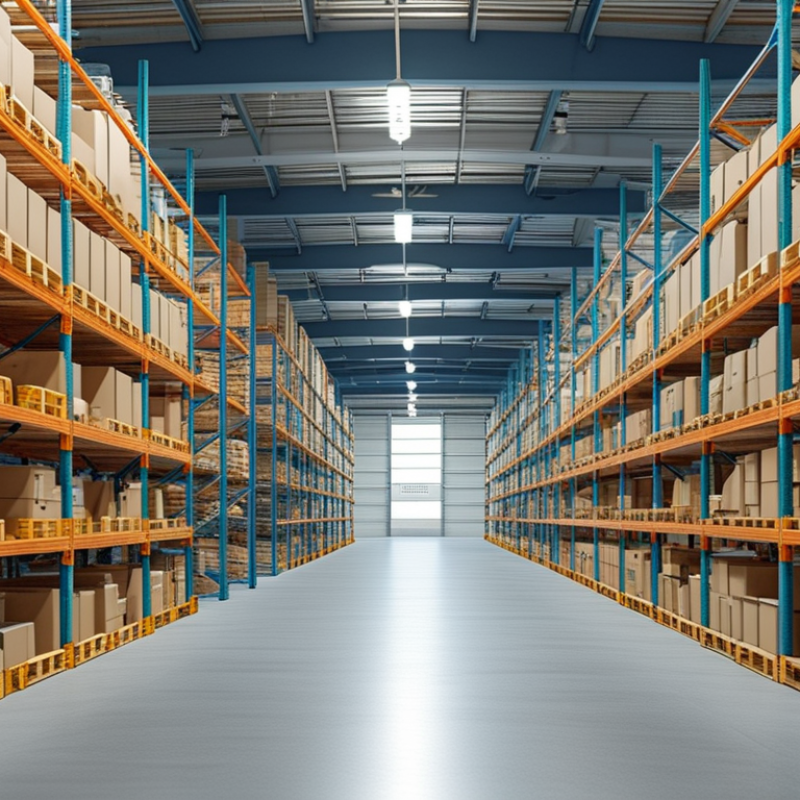
Medium-duty storage usually means shelving designed for 200–1,000 kg per shelf. The rating applies to one shelf, not the entire bay. That distinction matters.
The most common types include boltless shelving, longspan shelving, steel panel shelving, and light pallet racking.
Boltless systems suit cartons, tools, and maintenance parts. Longspan shelving handles wider loads, such as plastic bins or packaged components.
Steel panel shelves provide stronger, flatter support for dense inventory. Light pallet racking fits heavier unit loads, but it requires careful forklift clearance and floor planning.
Load ratings must reflect evenly distributed weight, shelf spacing, and frame height. A 500 kg shelf may not safely hold one concentrated machine part. It may need reinforcement or a different structure. The U.S. Occupational Safety and Health Administration stresses visible capacity information and stable storage practices in warehousing environments. Its guidance supports practical controls, although local engineering requirements may differ.
Industry data also shows why storage design is becoming more technical. MHI’s 2024 Annual Industry Report found that 55% of surveyed supply-chain leaders planned to increase technology investment. Better storage often supports that goal through barcode locations, adjustable levels, and measurable replenishment paths. The U.S. Bureau of Labor Statistics reported about 2.6 million nonfatal workplace injuries and illnesses in private industry during 2023. Medium-duty shelving cannot remove every risk. It can, however, reduce awkward handling when designed around real work patterns. The perfect specification is rarely perfect.
: It usually means shelving rated for 200–1,000 kilograms per shelf. The rating applies to one shelf, not the whole bay.
Boltless shelving suits cartons and tools. Longspan shelving handles bulky boxes. Steel panels support dense items. Light pallet racking suits heavier unit loads.
Not always. Ratings assume evenly distributed weight. One concentrated part may require reinforcement or a different structure.
Place heavy items low and lighter cartons higher. Keep loads centered and spread across the shelf surface. Avoid one-corner loading.
Check shelf ratings, beam spacing, frame height, deck material, floor condition, and product dimensions. Measure the boxes first.
Yes. It commonly supports 660–1,650 pounds per level with even loading. Its open design allows easier access to cartons and components.
It can shorten walking routes and reduce awkward lifting when arranged around real work patterns. It cannot remove every workplace risk.
Look for loose connectors, bent uprights, overloaded levels, damaged shelves, and blocked aisles. Small defects can become daily hazards.
Barcode locations, adjustable shelf levels, and measurable replenishment paths can improve retrieval. The system still depends on accurate labeling.
Rarely. Observe workers for a week and adjust blocked access, poor clearances, or awkward lifting points. The original plan may be wrong.
Medium Duty Storage refers to shelving systems designed for moderate industrial loads, typically supporting about 200–1,000 kg per shelf in common industry practice. The main options include steel shelving, which may be rated at approximately 400–1,000 lb per level; rivet shelving, often supporting 600–1,500 lb per level for hand-loaded inventory; and longspan shelving, generally suited to bulky industrial goods weighing around 660–1,650 lb per level. These systems provide practical organization for warehouses, workshops, stockrooms, and similar commercial environments.
Selecting the right Medium Duty Storage system requires evaluating the weight, size, shape, and handling frequency of stored items. Shelf dimensions, load distribution, adjustability, stability, installation conditions, and future capacity needs should also be considered. Following applicable ANSI/RMI MH16.1 safety guidance helps users assess structural performance, loading practices, inspection requirements, and safe operation. Proper planning ensures the shelving configuration matches its intended use and supports reliable, efficient inventory management.

 Yuanzhang Rack