What Is Narrow Aisle Storage and How Does It Work?

Time:2026-10-01 Author:Sienna
0%

Narrow Aisle Storage is a warehouse strategy designed to use floor space more efficiently without sacrificing organized access to inventory. It reduces the distance between pallet racks, often creating aisles between 1.5 and 2.1 meters wide. That small change can add valuable storage positions inside an existing building.

Warehouse consultant David J. Piasecki explains, “Narrow aisles save space only when the handling equipment and operating discipline match the design.” This principle matters because standard forklifts may not turn safely in restricted spaces. Facilities commonly use reach trucks, turret trucks, or articulated forklifts with suitable lifting heights and navigation features. Operators also need clear location labels, stable pallets, controlled travel speeds, and consistent replenishment procedures.

The system works through careful coordination. Racking is arranged in straight, dense rows. A forklift enters each aisle, lifts or retrieves a pallet, and returns through a planned traffic route. In some warehouses, wire guidance or rail guidance helps maintain accurate movement. The result can be higher cube utilization and shorter walking distances for selected operations.

Yet the idea is not automatically efficient. A narrow aisle can become a bottleneck when equipment is unavailable, products turn rapidly, or replenishment timing is poorly managed. That is an uncomfortable detail. More storage density does not always mean better performance.

This guide will examine how Narrow Aisle Storage works, which equipment it requires, and where its practical limits appear. The real question is simple: can the layout support daily work, not merely fit more pallets?
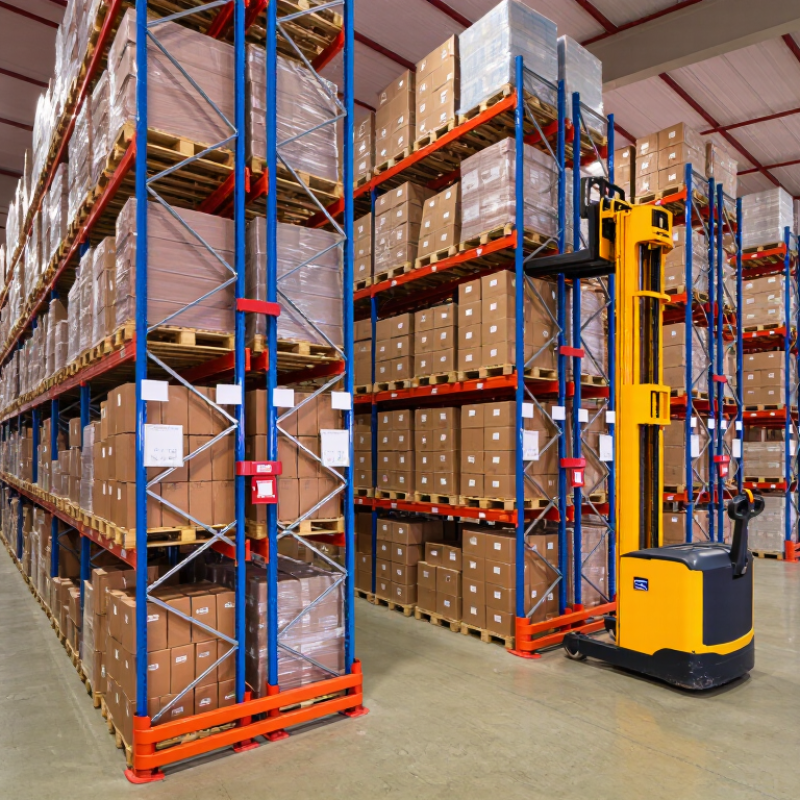
What Is Narrow Aisle Storage and How Does It Work?

What Narrow Aisle Storage Means

Narrow aisle storage means placing pallet racks closer together than in a conventional warehouse. This design preserves more floor space for inventory while reducing room for forklifts to turn. Aisles often measure around 1.8 to 2.5 meters, but the correct width depends on equipment, pallet size, and operator clearance. It is not simply “more racks.” The core idea is controlled space.

In a practical site assessment, planners measure rack height, load weight, travel paths, and emergency access. Specialized forklifts can move vertically and position pallets within tighter aisles. Their guidance systems also support accurate placement. Still, technology does not fix poor planning. A small measurement error can cause contact between a load and an upright frame.

The system works best when storage locations follow a clear inventory pattern. Fast-moving goods should remain easy to reach, while slower stock can use higher levels. Floor markings, impact protection, inspections, and operator training support daily safety. A narrow aisle layout may look efficient on paper but feel awkward during busy picking periods. That gap deserves review. Managers should observe real movements, not rely only on a drawing. Even a well-designed aisle can become inefficient when pallet dimensions change. Regular checks keep the arrangement practical, stable, and suitable for actual warehouse work.

The Main Components of a Narrow Aisle System

The Main Components of a Narrow Aisle System

A narrow aisle system begins with high-density pallet racking and carefully measured travel lanes. The rack frames must match pallet weight, height, and load frequency. Upright protectors help absorb impacts near corners. Beam levels should remain visible for routine inspections. Small alignment errors can become serious problems when equipment operates within inches of the rack.

Specialized handling equipment is another essential component. Reach trucks or turret trucks lift pallets vertically while turning inside restricted spaces. Some systems use floor-mounted guide rails or wire guidance to keep trucks centered. Cameras, sensors, and load indicators improve operator awareness. Yet technology cannot replace clear training. Operators still need safe speed limits, stable loads, and enough clearance above each pallet.

The floor also matters. It must be level, strong, and free from damaged joints. Uneven surfaces can affect steering and create repeated rack contact. A warehouse management system may direct storage locations and record pallet movements. However, inaccurate inventory data can weaken the entire design. Regular checks should include rack connections, beam locks, guidance equipment, lighting, and emergency access. Fire protection and pedestrian controls require careful coordination with the building layout. Narrow aisles save space, but they can reduce flexibility when product sizes change. That trade-off deserves honest review.

How Narrow Aisle Storage Operates Step by Step

What Is Narrow Aisle Storage and How Does It Work?

How Narrow Aisle Storage Operates Step by Step

Narrow aisle storage begins with a warehouse survey. Teams measure pallet dimensions, ceiling height, floor condition, and turning space. They then assign locations using product velocity and handling requirements. Fast-moving cartons stay near dispatch doors. Reserve pallets move higher or deeper. Aisles often measure about 1.8 to 2.7 meters, but equipment and load sizes determine the safe width.

The process is precise. A worker scans the pallet and destination location. The warehouse system confirms the slot. A suitable lift truck enters slowly, aligns with the rack, and raises the load vertically. Guide rails, sensors, or floor markings help maintain position. The operator places the pallet, confirms the scan, and exits without blocking traffic. During retrieval, the same steps run in reverse. OSHA requires powered industrial truck operators to receive training and evaluation, while MHI’s 2024 Annual Industry Report identifies labor shortages as a continuing challenge for 55% of respondents.

Density improves, but the system is not flawless. A single damaged pallet can stop access in a tight aisle. Poor slotting creates unnecessary travel and awkward handling. Human judgment still matters. I have seen efficient layouts fail when replenishment ignores peak-hour congestion. Regular rack inspections, battery checks, scan audits, and refresher training keep the process dependable. Small errors become expensive here.

Equipment Used in Narrow Aisle Warehouses

Narrow aisle storage uses compact aisles to increase pallet capacity without expanding the building. Equipment makes this arrangement practical. Reach trucks lift pallets vertically and extend their forks into deep rack positions. Their smaller turning radius supports aisle widths of roughly 2.4 to 3 metres. Operators need clear visibility, stable loads, and accurate rack measurements.

Very narrow aisle warehouses use turret trucks or articulated forklifts. These machines can rotate their forks inside the aisle, reducing the need for wide turning space. Some models follow floor guidance systems, while others depend on careful steering. Order-picking equipment helps workers collect cartons from different storage levels. Pallet racking, guardrails, dock plates, and protective barriers complete the working system. Small details matter.

Digital scanners record pallet locations and reduce searching time. Sensors can warn operators about nearby obstacles, although they should not replace attention. Battery charging areas also require ventilation, inspection routines, and controlled access. During warehouse assessments, planners sometimes calculate aisle clearance too tightly. That mistake becomes obvious when a loaded pallet bends slightly or a driver approaches at an angle. Regular equipment checks, floor inspections, and practical operator training help correct these weaknesses. Even a well-designed layout can perform poorly when workers lack enough turning practice.

Benefits and Practical Limitations of Narrow Aisle Storage

Narrow aisle storage places pallet racks in lanes roughly 8 to 10 feet wide. Conventional layouts often require about 12 feet. The narrower design can create more pallet positions inside the same building shell. It can also shorten travel distances between storage zones. However, density is not automatic. Taller racks demand suitable floor flatness, reach equipment, and carefully controlled operating procedures. One wrong turn can damage a load or rack upright. Small details matter.

The 2024 MHI Annual Industry Report found that 55% of surveyed supply-chain leaders increased automation investment. That figure supports interest in space-efficient systems, but it does not prove that narrow aisles suit every facility.

The practical limitations deserve equal attention. Specialized lift trucks usually cost more than standard equipment. They may also move more slowly in busy lanes. Operators need room for turning, reversing, and recovering unstable pallets. Narrow lanes reduce passing opportunities and can expose congestion during peak shifts. High-density storage may require moving one pallet before reaching another. This can weaken selectivity and complicate first-in, first-out control.

The 2023 Warehousing Education and Research Council DC Measures report recorded a median inventory accuracy of 99.5% among participating facilities. Dense storage cannot fix poor scanning or weak slotting. It may reveal those problems sooner.

Local fire protection, emergency access, and rack-load requirements still shape the design. The uncomfortable question remains: is saved floor space worth the added equipment, training, and discipline? Often, yes. Not always.

FAQS

What is a narrow aisle storage system?

It places pallet racks in lanes about 2.4 to 3 metres wide. This creates more pallet positions inside the same building. Space savings are not guaranteed.

Which equipment works in narrow aisles?

Reach trucks lift pallets and extend forks into deep rack positions. Turret trucks can rotate their forks within very restricted lanes. Order-picking equipment supports carton collection at different levels.

Why are rack measurements important?

Small alignment errors can cause repeated contact with rack uprights. Rack frames must match pallet weight, height, and loading frequency. A few inches matter.

What floor conditions does this system require?

The floor should be level, strong, and free from damaged joints. Uneven surfaces can affect steering and create rack impacts. Floor defects become expensive quickly.

How can guidance technology improve warehouse safety?

Floor rails, wire guidance, cameras, and sensors help trucks stay centred. Load indicators can improve awareness near overhead beams. Technology cannot replace training.

What should operators check before moving a pallet?

They should confirm stable loads, clear visibility, safe speed, and overhead clearance. They also need enough room for turning and reversing. One wrong angle can damage a pallet.

Does narrow aisle storage improve inventory control?

Digital scanners can record pallet locations and reduce searching time. Accurate data and disciplined slotting remain essential. Dense storage may expose weak records sooner.

What are the main limitations of narrow aisle systems?

Specialized trucks usually cost more and may move slowly during busy periods. Narrow lanes reduce passing space and can create congestion. The design is not flawless.

Can narrow aisles support every type of warehouse?

No. Product sizes, fire protection, emergency access, and load requirements affect suitability. Dense storage may also reduce selectivity when one pallet blocks another. The trade-off deserves honest review.

Conclusion

Narrow Aisle Storage is a warehouse organization method that increases storage capacity by reducing the space between pallet racks while maintaining efficient access to inventory. A typical system includes strategically arranged racks, clearly defined travel paths, suitable lifting equipment, and inventory locations designed for accurate picking and replenishment. By using vertical space more effectively, it allows warehouses to store more goods within the same floor area.

In operation, warehouse staff place pallets in designated rack positions and use specialized equipment to move through the narrower aisles, retrieve products, and restock inventory. Common equipment may include reach trucks, narrow-aisle forklifts, order pickers, and guided handling systems. The main benefits are improved space utilization, organized stock control, and potentially lower facility expansion costs. However, narrow aisles can require specialized training, careful traffic management, and higher investment in equipment. The system may also reduce flexibility if product sizes or handling requirements change significantly.

Sienna

Sienna

Sienna is a skilled marketing professional with a deep expertise in our company’s core products and services. With a passion for innovation and detail, she plays a pivotal role in crafting insightful blog posts that not only highlight the unique features of our offerings but also provide valuable......