Choosing the right Steel Platforms is not a cosmetic decision. It affects worker movement, load control, maintenance access, and long-term operating costs.
The U.S. Bureau of Labor Statistics reported 865 fatal workplace injuries involving falls, slips, or trips in 2022. That figure gives platform selection a sharper meaning. A narrow deck, weak guardrail, or poorly placed stair can create daily risk. OSHA’s Walking-Working Surfaces requirements also emphasize structural integrity, safe access, guarding, and regular inspection. These are not optional details.
Design begins with the real work.
Charles J. Carter, former president of the American Institute of Steel Construction, has said, “Steel is the most recycled material on the planet.” That sustainability advantage matters, but recycled content cannot compensate for poor engineering. The platform must match the load, span, environment, workflow, and future maintenance plan. AISC guidance, OSHA requirements, and manufacturer load tables should be reviewed together, not separately.
Industry reports from Grand View Research continue to show strong demand for structural steel in industrial and commercial construction. Yet market growth does not guarantee a safe purchase. Some platforms look durable under bright warehouse lights, while hidden corrosion develops beneath grating or around connection points. This is where experience matters.
The following ten tips examine capacity, materials, dimensions, access, safety features, installation, compliance, corrosion protection, maintenance, and total cost. The list is practical, but not perfect. Site conditions vary. A careful review may still reveal an overlooked detail.
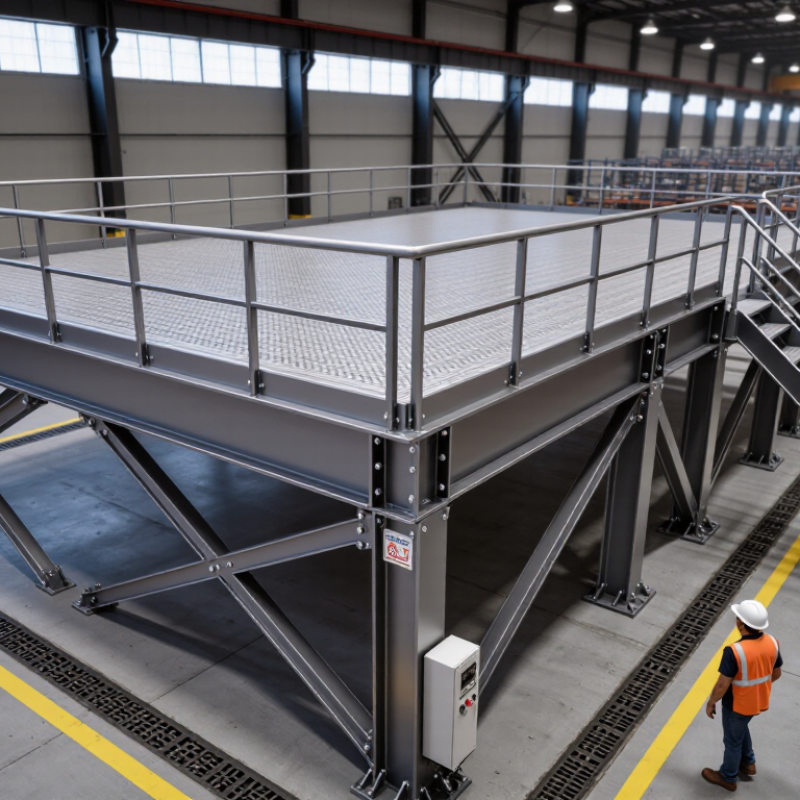
Steel platforms are raised work areas used in factories, warehouses, maintenance rooms, and outdoor service zones. Their main purpose is safe access, not simply creating extra floor space. A good platform should match the expected load, span, height, and working movement. Think about people, tools, stored materials, and vibration. Every kilogram matters.
During site inspections, I check the supporting structure before reviewing the deck. Columns, beams, anchor points, and connections must work as one system. Guardrails need suitable height and secure midrails. Stairs should provide steady footing, even when workers carry equipment. Slip-resistant grating helps. Drainage also matters outdoors. Standing water can accelerate corrosion and create hidden ice hazards.
Choose materials for the environment. Humid plants, coastal areas, and chemical-processing spaces may require stronger corrosion protection. Inspect welds, bolts, and coating damage during installation and routine maintenance. A platform may look solid and still perform poorly under repeated movement. That lesson is easy to overlook. I once focused too heavily on deck strength and underestimated access comfort. The platform passed basic checks, but workers avoided one stair route because its angle felt awkward. Usability is part of safety. Check load calculations, installation tolerances, emergency access, future expansion, inspection records, and maintenance costs before approval. Cheap design choices can become expensive corrections.
| No. | Selection Tip | Key Dimension to Evaluate | Practical Guidance | Typical Applications |
|---|---|---|---|---|
| 1 | Define the Intended Use | Work access, equipment support, storage, or pedestrian traffic | Select the platform type according to whether it is a permanent structure, temporary work platform, maintenance walkway, or loading area. | Industrial maintenance, warehouses, process plants, construction sites |
| 2 | Calculate the Required Load Capacity | Dead load, live load, point loads, and dynamic loads | Include people, tools, stored materials, machinery, impact, and vibration. Structural capacity must be verified by a qualified engineer and applicable local codes. | Equipment platforms, mezzanines, access decks, material handling areas |
| 3 | Choose the Appropriate Platform Type | Fixed, freestanding, suspended, mobile, or modular construction | Fixed platforms suit long-term access, while modular or mobile platforms are useful where layouts or maintenance requirements change frequently. | Production lines, aircraft maintenance, warehouses, inspection areas |
| 4 | Select a Suitable Surface | Grip, drainage, openings, cleanliness, and maintenance requirements | Use bar grating for drainage and ventilation, solid plate for small items or liquid containment, and anti-slip finishes where foot traffic is expected. | Outdoor walkways, chemical areas, food-processing support zones, elevated work decks |
| 5 | Check Span and Deflection | Beam span, support spacing, vibration, and allowable deflection | A platform can be strong enough yet uncomfortable or unsuitable if it deflects or vibrates excessively. Confirm serviceability limits during design. | Long walkways, elevated machinery access, operator stations, maintenance decks |
| 6 | Evaluate Corrosion Protection | Moisture, chemicals, salt exposure, temperature, and maintenance access | Hot-dip galvanizing is commonly used for atmospheric corrosion protection; paint systems or stainless steel may be considered for specific environments. | Coastal facilities, wastewater plants, outdoor process areas, utility structures |
| 7 | Prioritize Fall Protection | Guardrails, toe boards, gates, handrails, and safe access points | Provide edge protection wherever people may fall. Guardrail dimensions, openings, and access arrangements should comply with the governing safety regulations. | Roof access, elevated inspection platforms, plant walkways, loading areas |
| 8 | Plan Access and Ergonomics | Stairs, ladders, ramps, clearances, reach distance, and working height | Choose access equipment that supports safe movement, regular inspection, emergency egress, and comfortable maintenance work. | Machine servicing, storage mezzanines, process equipment access, inspection stations |
| 9 | Review Installation and Modularity | Connection method, transport size, assembly sequence, and future expansion | Bolted, prefabricated components can reduce site work and simplify relocation, but all connections must be designed for the specified loads and environment. | Temporary works, leased facilities, changing production layouts, modular warehouses |
| 10 | Compare Total Lifecycle Cost | Purchase price, installation, inspection, repair, coating renewal, and service life | Compare solutions using durability, maintenance frequency, replacement access, energy use during fabrication, and expected operating life—not only initial cost. | Long-term industrial facilities, infrastructure, utilities, logistics centers |
Note: Load ratings, dimensions, guardrail requirements, access provisions, and structural details must be confirmed through project-specific engineering calculations and the applicable local building and occupational safety codes.
It provides safe access for people, tools, and maintenance work above ground level. A raised walkway, not just extra storage.
Include workers, tools, stored materials, movement, and possible impact forces. A 500-kilogram estimate may need a larger engineering margin.
Check columns, beams, welds, anchor bolts, connections, and deck supports. Every part works together.
Use guardrails, midrails, toe boards, secure gates, and slip-resistant decking where needed. Wet boots can slide quickly.
Rain, ice, wind, standing water, and salt air can increase corrosion and slipping risks. Drainage deserves attention.
Check stair angle, tread comfort, handrail position, width, landing space, and headroom. Workers should carry equipment safely.
Measure equipment movement, worker reach, door clearance, material staging, and emergency routes. A narrow deck may technically fit but still frustrate workers.
Inspect it after installation, modification, impact, or corrosion, then follow a documented routine schedule. Look beneath the coating.
Keep load calculations, drawings, inspection findings, environmental limits, and maintenance records. Paperwork can reveal overlooked problems.
Do not focus only on deck strength while ignoring comfort, access, and evacuation. A platform can pass basic checks and still work poorly.
Choosing the right Steel Platforms begins with understanding their intended applications, such as industrial access, maintenance work, storage support, or elevated operations. The selection process should carefully evaluate expected loads, traffic frequency, environmental conditions, available space, and required platform dimensions. Material quality is also important, so buyers should compare suitable steel grades, corrosion-resistant surface treatments, and structural designs that provide strength, stability, and long-term durability.
A reliable platform should include essential safety features such as guardrails, secure access points, non-slip surfaces, toe boards, and clearly defined load limits. Accessibility and compliance with applicable workplace and building requirements should be confirmed before purchase. Proper installation is equally important and should be performed according to the design specifications. Regular inspections, cleaning, corrosion checks, fastener reviews, and timely repairs can help maintain performance and extend the service life of Steel Platforms. Careful planning from selection through maintenance ensures a safer, more efficient, and cost-effective solution.

 Yuanzhang Rack