Drive-in Storage can increase pallet capacity by using fewer aisles, but its value depends on how goods move each day. It is often considered for warehouses holding many pallets of similar products. Forklifts enter the rack lanes to place and retrieve loads. That changes how operators manage access, rotation, and safety. High density is useful, but it is not automatically the best fit. A buyer should compare the system with inventory turnover, available floor space, forklift dimensions, and planned pallet sizes.
For global buyers, choosing a supplier takes more than comparing quoted prices. Ask for clear load ratings, drawings, installation requirements, and details about coatings and components. Check that the proposed design matches the actual building dimensions and operating conditions. Details get missed. A small difference in pallet width or forklift clearance can affect daily handling. Request references for installations with similar products and workflows, and confirm what support is available after delivery. Freight, local installation, spare parts, and maintenance can change the total cost. Requirements also vary by site, so buyers should verify applicable building and safety rules with qualified local professionals. These seven tips will help structure that review, while leaving room to question assumptions. I would not choose a system on density alone.
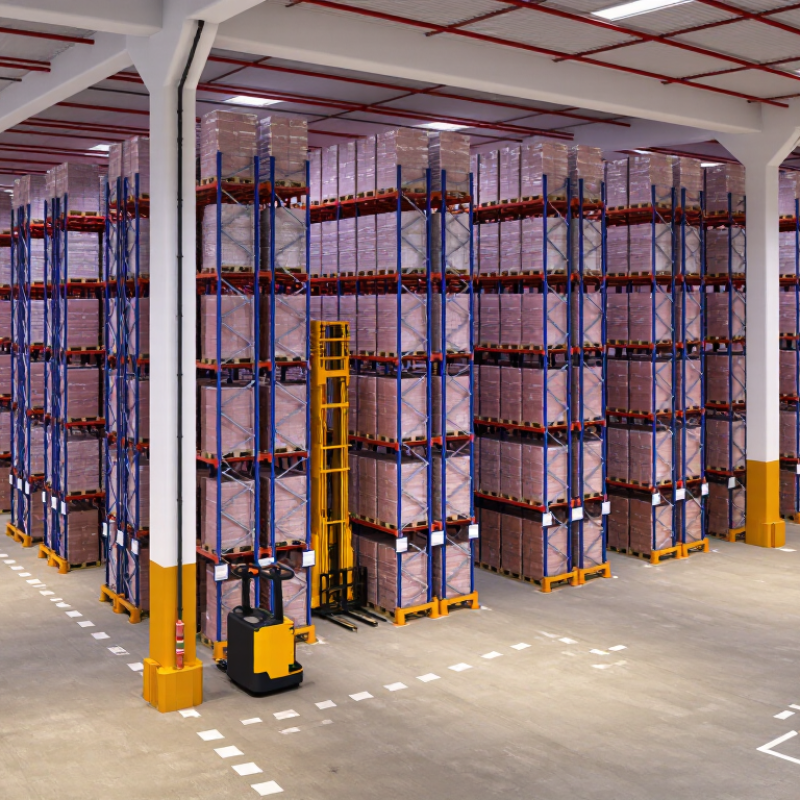
Before selecting drive-in storage, map the inventory by SKU, pallet size, weight, and daily movement. Review several weeks of receipts and dispatches, including seasonal peaks. Measure the real load. Not just the label. Pallet overhang, damaged boards, or uneven wrapping can affect how safely loads travel on support rails.
Drive-in racks reduce aisle space, but forklifts enter the storage lanes. Check the truck’s turning clearance, mast height, and load capacity with the heaviest pallet. Lane depth matters too: deep lanes can store more of one SKU, but may make access slower when products vary. Drive-in systems usually suit last-in, first-out access. If stock rotation requires first-in, first-out handling, assess whether a drive-through layout is more appropriate.
Estimate throughput in pallet movements per hour during busy shifts, not only average daily volume. Count how often operators must move front pallets to reach stock behind them. Confirm that inbound pallet dimensions match what the facility actually receives; supplier specifications can miss small but important variations. One awkward exception can disrupt a whole lane. A simple trial layout using real pallet measurements and forklift turning paths can reveal problems early. It may not be perfect, but it is more useful than planning from catalogue dimensions alone.
Drive-in rack selection starts with the load, not the advertised storage density. Deep lanes reduce aisle space, but typically limit access to last-in, first-out inventory. Compare lane depth with the number of pallets per SKU and the age sensitivity of stock. A 2024 MHI industry report found that 55% of surveyed supply-chain professionals planned to increase technology investment. That trend makes equipment and inventory-system compatibility worth checking early, not after installation.
Ask suppliers to document both per-pallet and per-lane load ratings, then compare them with actual pallet weights and dimensions. Measure clear warehouse height, sprinkler clearance, floor condition, and the narrowest aisle. Measure twice. Forklift fit matters just as much: confirm truck width, mast height, turning radius, fork length, and whether the operator enters the lane carrying a raised load. A small mismatch can reduce usable capacity or make loading awkward. Small gaps matter.
For global projects, verify pallet standards and truck specifications at the destination site; dimensions that work at one warehouse may not transfer neatly to another. Request a layout showing usable positions, operating clearances, and the assumed vehicle model. The stated capacity can look impressive on paper. I would still challenge the assumptions: mixed pallet sizes, uneven loads, and changing stock profiles can undermine a tidy plan. Have a qualified rack designer review the final configuration against applicable local design and safety requirements.
Before selecting drive-in storage, confirm that the rack design and operating plan meet the destination’s fire, building, and workplace-safety rules. Requirements can differ by city, even within one country. Ask a local engineer or authority having jurisdiction to review permits, seismic loads, aisle access, sprinkler coverage, and forklift clearances. Check that the supplier can provide stamped calculations and installation records. Paperwork matters.
These figures cover warehouses broadly, not drive-in systems alone, but they underline the value of fire protection checks. Confirm that sprinkler heads can reach storage areas and that rack depth does not obstruct fire routes. Also verify forklift operator training and inspection procedures against applicable local requirements; U.S. OSHA rules, for example, address powered industrial truck training. A tidy checklist helps, but it can miss details. Walk the loaded aisles, inspect guards and signage, and document who will correct any gaps. The small details count.
For drive-in storage, supplier experience should be visible in the details. Ask for references from projects with similar pallet loads, forklift types, and operating conditions. Request engineering drawings that show aisle clearances, rack depth, load limits, and protection at entry points. A neat rendering is not enough. Check whether the supplier explains how its design handles your actual workflow.
Customization should solve a measured problem, not simply add options. The MHI 2024 Annual Industry Report found that 55% of surveyed organizations planned to increase supply-chain technology investment, while 88% expected technology and innovation to provide a competitive advantage. These figures cover supply chains broadly, not drive-in racks specifically. Still, they underline why layouts should allow for operational change. Share pallet dimensions, stock rotation needs, and local site conditions before approving a design. Small details matter.
After-sales support deserves the same scrutiny as the quotation. Confirm inspection guidance, spare-part availability, warranty coverage, and response times across your region. Ask who handles installation questions after handover, and whether manuals are available in a language your team can use. Get the commitments in writing. A low initial price can be tempting; it may not stay low if replacement parts take weeks to arrive. Even experienced buyers can overlook that risk.
A drive-in storage system can look economical when you compare only the rack price. Build a landed-cost estimate instead. Include freight, insurance, customs charges, unloading equipment, installation labor, and any floor repairs. A quote may exclude small items, such as anchors or protective guards. Those costs add up.
Shipping depends on the system’s dimensions, steel weight, packing method, and delivery location. Ask suppliers for packed measurements and shipment terms before booking transport. Confirm whether trucks or containers can reach your site, and whether a forklift is available at delivery. Keep space for delays. One estimate may still be wrong.
Installation costs vary with warehouse height, floor condition, and crew experience. Request drawings that show clearances, aisle access, and the required floor strength. A qualified local engineer should review site conditions before installation.
Then budget for inspections, damaged-frame repairs, and replacement components over time. Check upright columns, bracing, rails, and anchors regularly, especially after impacts. Keep spare parts accessible.
Dust and moisture matter, too. Their effect is easy to underestimate. Compare maintenance needs and service availability across locations, not just the first year’s cost. A simple spreadsheet helps track assumptions, but revisit it when freight rates or operating plans change.
Record each SKU’s pallet size, weight, and daily movement. Review several weeks of receipts and dispatches, including seasonal peaks. Measure actual pallets, not just labels.
Overhanging loads, damaged boards, and uneven wrapping can affect safe travel on support rails. One awkward pallet can disrupt a lane.
Check turning clearance, mast height, and capacity with the heaviest pallet. Test the route using real pallet dimensions. Measure twice; plans can miss tight turns.
Deep lanes hold more of one SKU but can slow access when products vary. Drive-in storage generally follows last-in, first-out handling. Consider another layout if stock rotation needs first-in, first-out access.
Count pallet movements per hour during busy shifts, not only average daily volume. Include moves needed to reach pallets behind front stock. That hidden work adds up.
Include freight, insurance, customs charges, unloading equipment, installation labor, and floor repairs. Check whether anchors and protective guards are included. Small items matter.
Ask for packed dimensions, steel weight, and shipment terms. Confirm site access for trucks or containers and forklift availability at delivery. Keep space for delays.
Request drawings showing clearances, aisle access, and floor-strength requirements. Have a qualified local engineer review site conditions. Budget for inspections, repairs, and replacement parts.
Inspect upright columns, bracing, rails, and anchors, especially after impacts. Keep spare parts accessible. Dust and moisture matter, too; their effects are easy to underestimate.
Choosing the right Drive-in Storage system starts with a clear understanding of your inventory, pallet dimensions, stock rotation, and daily throughput. These details help determine whether a high-density layout suits your operation and how much aisle access you need. Compare rack depth, height, load capacity, and structural design, while confirming compatibility with your forklifts and other handling equipment. A system that fits your building and operating process can make better use of available space without slowing warehouse activity.
Before making a decision, review applicable safety standards and local requirements, and assess the supplier’s experience, customization options, installation guidance, and after-sales support. Look beyond the initial purchase price by estimating shipping, installation, inspections, repairs, and long-term maintenance. Considering these factors together helps global buyers compare proposals more effectively and select a storage solution that balances capacity, safety, operational efficiency, and total cost over time.

Yuanzhang Rack