How to Choose Carton Flow Storage for Your Warehouse?

Time:2026-10-22 Author:Isabella
0%

Choosing the right Carton Flow Storage system can reshape daily warehouse performance. It affects picking speed, replenishment effort, product visibility, and worker safety. A well-planned lane keeps cartons moving forward, so operators can reach the front without searching through deep shelves.

Ken Ackerman, a recognized warehouse management author, has said, “The warehouse is not a place to store inventory; it is a place to move inventory.” That principle matters when comparing carton dimensions, product turnover, lane depth, rack height, and replenishment methods. Carton Flow Storage should support the actual movement of goods, not simply fill unused vertical space.

This guide examines practical selection factors for different warehouse environments. It considers fast-moving items, mixed carton sizes, FIFO requirements, and order-picking frequency. A grocery distributor may need inclined roller lanes for frequent case picking. An e-commerce operation may prefer adjustable dividers and shorter pick faces. Small details matter, such as whether a carton stops cleanly at the pick position or rolls too forcefully.

There is no universal layout. That is the uncomfortable part. A system that works in a clean, high-volume warehouse may perform poorly in a crowded facility with irregular cartons. Measurements can also change after installation. For that reason, the best decision combines supplier expertise, operator feedback, trial testing, and reliable capacity calculations. The following sections explain how to evaluate these choices with greater confidence and fewer expensive assumptions.
How to Choose Carton Flow Storage for Your Warehouse?

Understanding Carton Flow Storage and Its Warehouse Applications

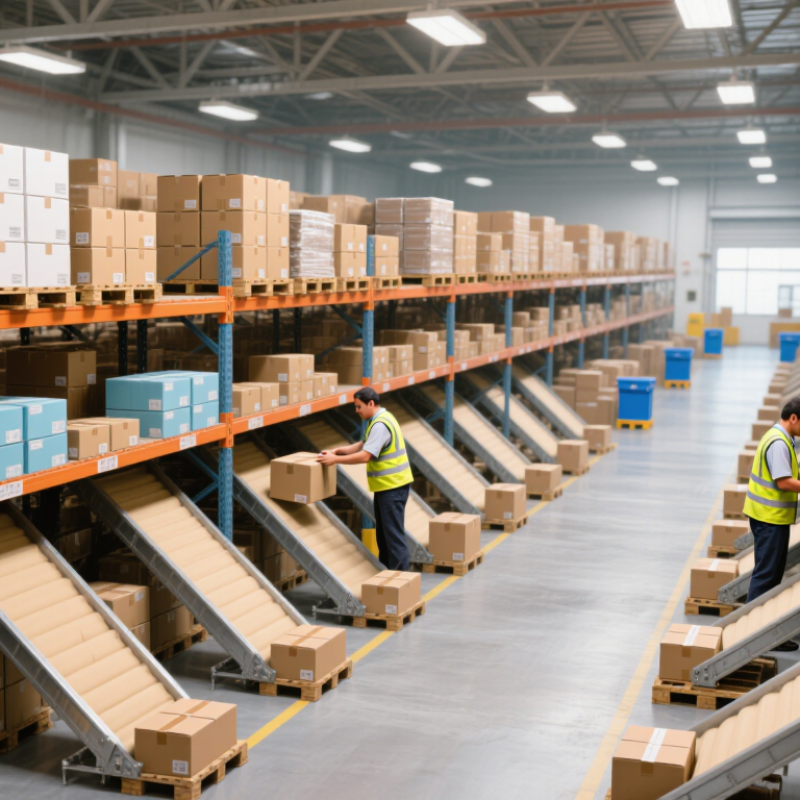
Carton flow storage uses inclined roller lanes to move cartons toward the picking side. When one carton is removed, another advances by gravity. This design supports organized picking, clear stock visibility, and practical first-in, first-out rotation. It works well for small parts, packaged goods, and fast-moving inventory. In warehouse reviews, I have found its value depends less on appearance than on SKU behavior. A beautiful rack can still waste space when cartons vary widely in size.

Choosing the right system requires measured details. Record carton width, depth, height, weight, and daily pick frequency. Match lane dimensions to the largest common carton, not only the average one. Check the slope and roller spacing with real cartons. Some boxes glide smoothly; others stop because of soft bottoms or uneven loads. Leave enough replenishment space behind the pick face. Also inspect frame capacity, aisle clearance, ergonomic reach, and guarding. These details protect workers and reduce avoidable handling.

Tips: Test one lane before expanding. Mark each pick face clearly. Review slow-moving SKUs monthly. Keep heavier cartons low. Do not assume every carton needs the same lane. That assumption is often expensive. Ask operators what feels awkward during busy periods. Their feedback may reveal problems that drawings miss.

Assessing Product, Inventory, and Space Requirements

How to Choose Carton Flow Storage for Your Warehouse?

Choosing carton flow storage starts with the products, not the rack dimensions. Measure carton width, depth, height, and weight across several batches. Packaging often changes more than expected. A box that fits today may drag tomorrow. Products need stable support and smooth movement. Fragile cartons may require gentler rollers. Heavy cartons may need reinforced lanes. Test the actual cartons, not only product specifications.

Inventory patterns also shape the design. Fast-moving items should sit near picking routes and waist height. Slow-moving stock can use less accessible positions. Review daily order lines, replenishment frequency, and seasonal peaks. A lane holding too much inventory wastes space. A lane holding too little creates constant replenishment work.

In one warehouse review, operators walked farther because popular cartons were stored at the wrong end. The layout looked tidy, but performance suffered.

Space planning requires more than measuring the available floor. Leave room for aisles, replenishment carts, emergency access, and safe operator movement. Check ceiling height and floor conditions before installation. Sloped floors can affect carton travel. Uneven loading can also create jams.

A small field test is worthwhile. Load several carton sizes, observe picking speed, and record jams over a full shift. The first layout may be wrong. That is useful evidence, not failure. Recheck the design after workers use it under real pressure.

Comparing Carton Flow Rack Designs and Configuration Options

Choosing carton flow storage starts with comparing rack designs, not simply counting available lanes. In daily warehouse work, gravity roller beds suit heavier cartons and longer lanes. Wheel tracks can reduce friction for lighter cartons and smaller packages. The difference becomes obvious when cartons have soft bases, uneven weight, or damaged corners.

A carton flow rack usually supports first-in, first-out movement. This helps control date-sensitive inventory and makes picking more predictable. Single-lane layouts work well for stable, high-volume items. Adjustable dividers create better control when carton widths change. Deep lanes increase storage density, but they may slow replenishment and hide stock problems. Shorter lanes often improve visibility.

Configuration should match the real carton profile. Measure length, width, height, weight, and base quality under working conditions. Add lane brakes when cartons accelerate too quickly. Use rear stops and clear labels to prevent misplaced stock. A slight bed slope is useful, but excessive slope can cause impacts. I once saw light cartons stall because the rollers were spaced poorly. The specification looked correct.

Not every popular design fits every operation. Test several loaded cartons before approving a full installation. Leave enough clearance for hands, scanners, and replenishment equipment. Review the layout after seasonal demand changes. A flexible rack may cost more initially, yet rigid lanes can create expensive rework later.

How to Choose Carton Flow Storage for Your Warehouse?

Comparison of common carton flow rack designs using practical planning benchmarks for lane capacity, storage density, and picking access.

Roller lanes generally provide the smoothest carton movement and are suitable for heavier cartons. Wheel-bed lanes offer a cost-effective option for stable cartons, while shelf-based carton flow is flexible for mixed SKU sizes and frequent slotting changes. Actual capacity depends on lane length, carton dimensions, rack configuration, and load distribution.

Evaluating Accessibility, Safety, and Operational Efficiency

Choosing carton flow storage should begin with access, not maximum density. A picker should face the carton directly, read the label, and replenish from the rear without entering the picking lane.

Adjustable rollers suit changing carton sizes. Yet, poor pitch or excessive slope can make cartons accelerate, collide, or fall.

Test the heaviest and lightest cartons during a live trial.

Safety needs equal attention. The U.S. Occupational Safety and Health Administration reports that materials-handling incidents contribute substantially to workplace injuries.

Guardrails, back stops, load limits, and clear pedestrian routes are essential. Keep replenishment traffic separate from picking traffic where possible.

Small details matter. A damaged roller can create a sudden stop.

Operational efficiency should be measured with evidence. The 2024 MHI Annual Industry Report found that 55% of surveyed organizations were increasing supply-chain technology investment.

Carton flow can support this trend when locations are clearly coded and replenishment data is accurate. Track pick time, replenishment frequency, mis-picks, and damaged cartons before and after installation.

A 2024 WERC distribution benchmarking report also emphasizes measurable performance, including order accuracy and labor productivity. Do not assume faster movement means better performance.

In some warehouses, dense flow lanes reduce travel but increase replenishment pressure. That trade-off is easy to miss.

A modest pilot, using real cartons and actual staff, often reveals more than a polished layout drawing.

Planning Installation, Maintenance, and Future Expansion

Choosing carton flow storage requires more than measuring available floor space. Record carton dimensions, weights, picking frequency, and replenishment patterns before selecting each lane. A practical layout keeps fast-moving items near the packing area. Leave enough aisle width for safe trolley movement and clear visibility. Check floor levelness, rack loads, fire protection, and emergency access before installation. Small errors here become expensive later.

Installers should anchor frames correctly and test every roller lane with real cartons. Cartons must move smoothly without bouncing, jamming, or striking the back stop. Label each lane clearly, then train staff to load from the replenishment side. My first warehouse review overlooked seasonal carton changes. That mistake reduced flow during peak weeks. Adjustable dividers and replaceable rollers can prevent similar problems.

Maintenance needs a simple weekly inspection, not a complicated manual. Remove loose packaging, inspect damaged rollers, and check bolts, guards, and labels. Record recurring jams by lane and product type. This evidence helps identify poor carton quality or incorrect lane settings. For future expansion, reserve structural space beside the system and protect access to utilities. Use modular sections where possible, but confirm that added weight will not exceed floor or frame capacity. Expansion plans should also consider new carton sizes, automation interfaces, and changing labor patterns. A cheap extension may create an awkward picking route. Recheck the workflow before approving it.

How to Choose Carton Flow Storage for Your Warehouse? - Planning Installation, Maintenance, and Future Expansion

Planning Dimension Recommended Data or Range Why It Matters Installation Consideration Maintenance and Expansion Guidance
Carton Dimensions Measure the smallest, average, and largest carton. A practical initial range is approximately 150–600 mm in length, 100–450 mm in width, and 75–400 mm in height. Roller pitch, lane width, and shelf spacing must support the full product range without cartons becoming unstable. Allow clearance around cartons so they can move freely but cannot rotate or fall between rollers. Review dimensions when new packaging is introduced. Use adjustable dividers or modular lanes where product sizes change frequently.
Carton Weight Confirm the maximum carton weight and the weight per lane. Many manual carton-flow applications operate within approximately 5–40 kg per carton, subject to equipment design. Weight affects roller diameter, axle strength, frame capacity, and replenishment safety. Position heavier cartons on lower levels where possible and verify the rated load for each shelf and lane. Inspect rollers, axles, and support beams for deformation. Do not exceed the stated working load.
Stock-Keeping Units Classify items by velocity: fast-moving items may represent roughly 20% of SKUs but generate a disproportionately high share of picks; slow-moving items can require fewer front-access lanes. Slotting based on demand reduces picker travel and replenishment interruptions. Place high-frequency SKUs between approximately waist and shoulder height when ergonomically suitable. Re-slot products periodically using order history, seasonal demand, and changes in carton size.
Lane Depth Select a depth that provides the required carton quantity without creating excessive reach. Common manual lane depths are approximately 1,200–2,400 mm. Longer lanes increase storage density but may make replenishment and carton control more difficult. Provide sufficient rear access or a defined replenishment route for loading cartons safely. Keep spare lane components available if the design uses modular sections that may be extended later.
Roller Pitch and Type Use enough rollers to maintain stable support. A typical center-to-center pitch may be approximately 50–75 mm for small cartons, with wider spacing requiring larger or more rigid carton bases. Continuous carton support improves flow and reduces tipping, snagging, and product damage. Match roller material and diameter to carton weight, bottom construction, ambient conditions, and expected usage. Clean rollers and inspect for seized bearings, damaged surfaces, and accumulated labels or packaging debris.
Shelf Slope A starting range of approximately 3–6 degrees is commonly evaluated for gravity flow, but the correct setting depends on carton weight, base friction, roller type, and lane length. Insufficient slope can stop carton movement; excessive slope can cause impact, product damage, or unsafe carton speed. Test representative cartons under loaded conditions before fixing the final slope. Recheck slope after rack relocation, impact, floor settlement, or structural modification.
Throughput Requirement Estimate average and peak picks per hour. Design for peak demand rather than the daily average, and include replenishment activity in the calculation. The storage layout must support order volume without creating congestion at pick faces or replenishment aisles. Separate picking and replenishment traffic where practical and preserve clear aisle widths required by site safety rules. Track picks per hour, stockouts, replenishment frequency, and queue time to identify capacity constraints.
Ergonomics Keep the most frequently handled cartons in the primary ergonomic zone, commonly between mid-thigh and shoulder height, subject to local risk assessment. Ergonomic positioning can reduce bending, overreaching, twisting, and manual-handling risk. Provide suitable step platforms or lifting equipment for upper levels and avoid obstructing emergency routes. Review injury reports, near misses, and operator feedback after installation and after major slotting changes.
Aisle and Work Area Determine aisle width from the handling method, equipment turning radius, pedestrian traffic, fire protection requirements, and local regulations. Adequate clearance supports safe movement, replenishment, inspection, and emergency access. Mark rack lines, pedestrian paths, replenishment zones, and no-storage areas before anchoring or loading the system. Keep aisles free of pallets, empty cartons, wrapping materials, and temporary inventory.
Floor and Building Conditions Verify floor levelness, slab condition, clear height, columns, doors, sprinklers, lighting, and building services before finalizing the layout. Uneven floors and obstructions can affect rack alignment, slope consistency, access, and future expansion. Confirm anchor requirements and allow service clearances around columns, sprinklers, electrical panels, and fire equipment. Inspect for floor damage, rack movement, corrosion, and clearance changes following construction or equipment relocation.
Safety Protection Include frame guards, end-of-aisle protection, backstops, load labels, safety pins, and carton retainers where the risk assessment requires them. Protective features reduce the likelihood and severity of impacts, falling cartons, and unauthorized loading. Install and inspect components according to the approved layout and applicable workplace safety requirements. Replace bent or missing protection immediately and post clear maximum-load and operating instructions.
Installation Sequence Use a controlled sequence: survey, mark-out, frame assembly, leveling, anchoring, roller installation, safety accessories, inspection, and trial loading. A documented sequence reduces alignment errors and makes commissioning easier to verify. Complete a final torque, level, anchor, clearance, and load-label check before normal operation. Keep installation drawings, inspection records, component lists, and approved modification history on site.
Routine Inspection Perform operator visual checks daily or per shift, a documented condition check at least monthly, and a formal competent-person inspection at an interval based on risk and local requirements. Early detection of damage helps prevent equipment failure and unsafe operation. Provide safe access for inspection without requiring staff to climb on rack beams or stored cartons. Record defects, isolate unsafe areas, and complete corrective actions before returning equipment to service.
Cleaning and Lubrication Use a cleaning schedule based on dust, packaging debris, food or pharmaceutical hygiene requirements, and operating hours. Lubricate only components approved for lubrication. Debris can restrict roller movement, while unsuitable lubricants can attract dust or contaminate cartons. Provide safe access and use cleaning materials compatible with the equipment and stored products. Replace worn rollers, bearings, dividers, and retainers rather than continuing to operate damaged components.
Expansion Capacity Reserve approximately 10–20% of the planned footprint or provide a documented method for adding lanes, levels, or modules, subject to site constraints. Planned capacity prevents costly redesign when SKU count, order volume, or carton variety increases. Confirm that future modules will not reduce required aisle, fire, lighting, or equipment clearances. Standardize frame dimensions and spare parts where possible to simplify future additions and repairs.
Performance Review Review storage utilization, pick rate, replenishment time, stockout frequency, carton damage, and operator incidents at least quarterly. Measured results show whether the system is meeting operational and safety objectives. Use trial data from representative shifts before approving a large-scale rollout. Adjust slotting, lane quantity, shelf height, and replenishment rules based on verified operational data.

FAQS

What is carton flow storage?

It uses inclined roller lanes to move cartons toward the picking side. Gravity advances the next carton after one is removed. It supports organized picking and practical first-in, first-out rotation.

Which products suit carton flow storage?

It suits small parts, packaged goods, and fast-moving inventory. Cartons should have stable bottoms and consistent dimensions. Soft or uneven cartons may stop unexpectedly.

What carton details should be measured?

Measure width, depth, height, weight, and daily pick frequency. Check several packaging batches, not one sample. Packaging can change more than expected.

How should lane dimensions be selected?

Match each lane to the largest common carton. Do not design around the average carton alone. Test roller spacing and slope with real cartons.

How can warehouse space be planned effectively?

Reserve space for aisles, replenishment carts, emergency access, and safe movement. Check ceiling height and floor conditions. A sloped floor can affect carton travel.

How should fast-moving inventory be positioned?

Place popular items near picking routes and around waist height. Store slower items in less accessible positions. A tidy layout can still create unnecessary walking.

What safety features are important?

Use back stops, load limits, guarding, and clear pedestrian routes. Keep replenishment traffic separate when possible. A damaged roller can cause a sudden stop.

How can the system be tested before expansion?

Test one lane during a full working shift. Use heavy, light, large, and small cartons. Record pick time, jams, replenishment frequency, and damaged cartons.

How should carton flow performance be reviewed?

Compare order accuracy, labor effort, pick speed, and replenishment pressure before and after installation. Faster carton movement is not always better. The first layout may be wrong. That is useful evidence.

Conclusion

Choosing Carton Flow Storage begins with understanding how it supports organized, high-volume picking by using gravity-fed lanes to move cartons toward the front of a rack. The right system depends on product dimensions, weight, packaging style, inventory turnover, replenishment methods, and available floor or vertical space. Reviewing these factors helps determine the appropriate lane depth, shelf spacing, load capacity, and overall storage density.

Different carton flow rack designs and configurations can be adapted for manual picking, batch operations, or combined storage and replenishment areas. When comparing options, consider worker accessibility, ergonomic working height, carton stability, labeling visibility, and safety features that reduce operational risks. Effective planning should also include installation requirements, routine inspections, roller and frame maintenance, and clear procedures for adjustments or repairs. Finally, selecting a flexible layout with room for additional lanes, changing product sizes, and future capacity increases can improve long-term efficiency and reduce the need for major warehouse modifications.

Isabella

Isabella

Isabella is a dedicated marketing professional with a sharp focus on driving brand growth and engagement through strategic content creation. With an extensive background in digital marketing, she combines her passion for storytelling with her keen understanding of industry trends to deliver......