Global buyers need more than a rack catalogue when selecting the 2026 best Push-Back Storage systems. They need evidence from real warehouse conditions. A cold-storage facility in Rotterdam may require corrosion-resistant components. A distribution center in Dubai may prioritize heat tolerance and dust protection. A narrow operation in Toronto may focus on pallet density and forklift clearance. These details affect performance, safety, and long-term cost.
John Paxton, former president and CEO of MHI, has emphasized the strategic value of warehouse operations: “The warehouse is no longer just a cost center; it is a strategic asset.” That principle applies directly to Push-Back Storage. A well-designed system can increase usable capacity while reducing travel distance and improving loading consistency. It can also expose weaknesses. Uneven pallets, poor lane discipline, or unsuitable carts may create delays that a sales brochure will not mention.
Performance matters most.
This guide compares leading Push-Back Storage racks for international buyers, including structural strength, pallet compatibility, lane depth, installation support, and maintenance access. It also considers regional service networks, technical documentation, spare-part availability, and compliance expectations. Ratings should not replace a site survey. They can, however, make early decisions clearer.
Some conclusions may remain imperfect. Product specifications change. Local handling practices vary. A rack that performs well in a high-volume beverage warehouse may disappoint in a mixed-SKU facility. Buyers should confirm load data, seismic requirements, aisle dimensions, and operator training before purchase. The strongest choice is not always the densest one. It is the system that remains predictable under daily pressure.
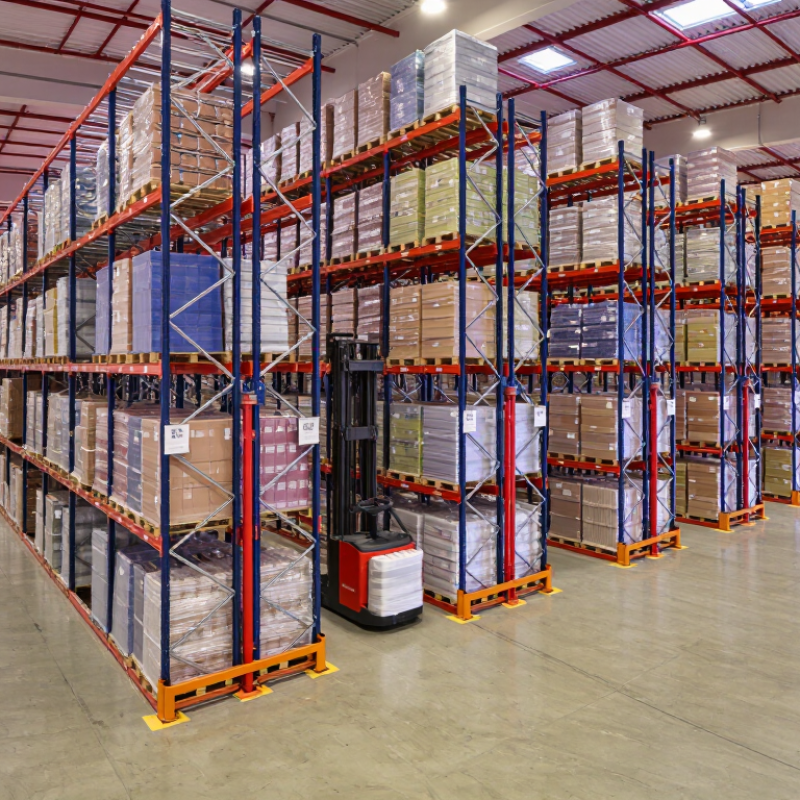
Push-back racks store pallets from two to six positions deep. They use inclined rails and nested carts to move pallets toward the aisle. A forklift places a new pallet from the front. The existing pallet rolls backward. This design uses less travel space than single-depth selective storage. It also creates a dense, organized warehouse layout. Two or three positions suit moderate turnover. Four to six positions improve density when floor space is expensive.
The system follows LIFO flow: last in, first out. The newest pallet leaves before older pallets behind it. This works well for products without strict age rotation requirements. Each lane should hold similar products, sizes, and handling units. Clear labels reduce picking errors. Operators must confirm pallet dimensions, load weight, and cart compatibility before installation. Small differences matter.
Safety needs practical attention. Forklift operators should enter squarely and avoid striking the rear stop. Damaged pallets can move unevenly. That risk is easy to underestimate. Regular checks should examine rails, wheels, frames, anchors, and pallet boards. In warehouse assessments, poor lane discipline often causes more trouble than the rack itself. A perfect rack choice is rare. Buyers should test representative loads, review actual throughput, and leave room for changing inventory patterns. A six-deep lane may look efficient, yet it can slow access when demand becomes unpredictable.
2026 Best Push Back Storage Racks for Global Buyers
Capacity planning should measure density against selectivity, not density alone. Push-back racks can provide up to 75% more storage density than many selective layouts. However, this figure depends on pallet size, aisle width, rack depth, and load stability. A high-density lane may hold five pallets, but it will not offer direct access to every pallet. That trade-off matters for buyers handling many SKUs.
MHI’s 2024 Annual Industry Report found that 76% of supply chain leaders view innovation as a competitive advantage. Space efficiency is becoming operational strategy, not just construction savings. The 2024 Global Industrial and Logistics report from Cushman & Wakefield also highlights continued pressure on warehouse space and occupancy costs. These findings support denser storage, but real operations need measured assumptions. A 75% gain may look impressive on paper. It can shrink when fast-moving items need frequent access.
Tips: Start with an ABC inventory review. Reserve push-back lanes for similar products with predictable rotation. Record pallet dimensions, load weights, retrieval frequency, and forklift clearance. Test one lane during peak hours. The result may challenge the original plan. Also, leave room for damaged pallets, replenishment traffic, and future SKU growth. Density without movement capacity can create hidden costs.
Selecting the best push-back storage rack in 2026 starts with verified load ratings. A rack may look strong, yet its capacity changes with beam levels, lane depth, pallet weight, and spacing. Ask for bay-specific calculations, not a single impressive number. Include pallet impact forces and uneven loads. Real warehouses rarely load every pallet perfectly.
Aisle width must match the handling equipment, pallet size, and operator visibility. Measure the truck’s turning radius with a loaded pallet, then add practical clearance. Tight aisles can increase storage density, but they also raise collision risk. Leave room for damaged pallets and slight positioning errors. A drawing may look efficient and still fail during a busy shift.
Beam-level safety deserves daily attention. Each beam should have secure locking pins, visible capacity labels, and no twisted connectors. Upright protectors help, but they cannot excuse careless driving. Inspect push-back carts, rails, rollers, and retaining stops for wear. Replace bent parts instead of straightening them on site. Rack inspections should be documented by trained personnel and checked against local engineering and workplace requirements. One overlooked detail is the upper beam: it may carry less weight, yet it still needs clear labeling and stable pallet support. Safety planning is never finished.
2026 buying criteria: load ratings, aisle width, and beam-level safety
Representative pallet-position ratings range from 500 to 1,000 kg. Final ratings must be verified against pallet weight, load center, beam span, and rack configuration.
Typical push-back layouts use approximately 2.4–3.0 m aisles, but the correct width depends on pallet dimensions, truck type, turning clearance, and local operating rules.
A practical design checkpoint is 75–125 mm of clearance between the stored load and beam level. Confirm deflection, impact protection, and regional rack-safety requirements before purchase.
Representative engineering benchmarks for preliminary comparison; not a substitute for a site-specific structural design or local compliance review.
2026 Best Push Back Storage Racks for Global Buyers
For global buyers, compliance should guide every push-back rack decision. ANSI MH16.1 defines structural requirements for industrial steel storage racks, including frames, beams, connections, and load capacity. EN 15635 adds operational controls for inspection, maintenance, and safe use. These standards address different stages. They should not be treated as interchangeable.
A practical inspection starts with the rack upright. Look for dents, twisted braces, loose anchors, and flaking welds. Check the carts, guide rails, retaining bars, and pallet supports. A missing load notice can create confusion during peak shifts. EN 15635 recommends regular visual checks and an expert inspection at intervals not exceeding twelve months. Higher-risk sites may need more frequent reviews. Use a documented checklist, photographs, and assigned corrective actions.
The data supports this discipline. The U.S. Bureau of Labor Statistics reported 4.8 recordable injury and illness cases per 100 full-time workers in transportation and warehousing during 2023. Not every incident involves racking, but busy warehouse traffic increases exposure to impacts and falling loads. ANSI MH16.1 capacity calculations also depend on actual pallet weight, beam levels, bay spacing, and seismic conditions. Guessing is unsafe.
A perfect checklist is not enough. Workers may overlook small rail damage during rushed inspections. Supervisors should review recurring defects and question loading habits. Global buyers should request structural calculations, material traceability, installation records, and inspection procedures before shipment. Some specifications still need local engineering review.
Push-back storage works best when the SKU profile accepts LIFO access. Start with turnover, not maximum density. Two-deep lanes suit fast-moving pallets needing frequent replenishment. Three or four lanes fit medium-turnover products with stable case quantities. Five or six lanes can improve cube utilization for slower-moving, batch-controlled stock.
Forklift geometry decides the practical limit. Check load length, aisle width, lift height, and rack clearance before ordering. Reach trucks may support deeper lanes, while counterbalance trucks often need wider operating space. Each lane should handle consistent pallet dimensions and weights. Mixed pallets create trouble. They can damage rails, reduce trolley movement, and slow retrieval.
The 2024 MHI Annual Industry Report states that 55% of supply-chain leaders increased technology and innovation investment. That supports better rack planning, but automation cannot repair poor SKU data. The 2024 DHL Logistics Trend Radar also identifies robotics and automation as important logistics trends. Still, a manual push-back system may be more reliable in facilities with uneven power access or limited technical support. The spreadsheet may be wrong. Test one loaded lane with the actual forklift, pallet, and operator. Record retrieval time, braking distance, and lane stability. Then adjust the depth. A six-deep lane looks efficient on paper, yet it may hide inventory aging and create costly reshuffling.
ANSI MH16.1 addresses structural design, connections, frames, beams, and load capacity. EN 15635 focuses on operation, inspection, and maintenance. They support different controls.
Inspect uprights, braces, anchors, welds, carts, guide rails, retaining bars, and pallet supports. Look for dents, twisting, loosened parts, and flaking welds. Small damage matters.
Workers should perform regular visual checks. An expert inspection should occur at least every twelve months. Higher-risk sites may need shorter intervals.
Use a dated checklist, clear photographs, assigned corrective actions, and completion dates. Record repeated defects. Paperwork alone is not enough.
Provide actual pallet weight, beam levels, bay spacing, pallet dimensions, and site conditions. Request structural calculations and material traceability. Guessing capacity is unsafe.
Two-deep lanes suit fast-moving pallets needing frequent replenishment. Three or four lanes fit stable, medium-turnover stock. Five or six lanes may suit slower, batch-controlled inventory.
Check load length, aisle width, lift height, and rack clearance before ordering. Reach trucks may support deeper lanes. Counterbalance trucks often need more operating space.
No. Keep pallet dimensions and weights consistent within each lane. Mixed loads can damage rails, restrict trolley movement, and slow retrieval. Uniformity helps.
Test one loaded lane with the actual forklift, pallet, and operator. Record retrieval time, braking distance, and lane stability. The spreadsheet may be wrong.
Yes. Six-deep lanes may improve cube use but hide aging inventory and increase reshuffling. Review access needs carefully. More density is not always better.
Push-Back Storage systems offer a practical balance between high-density warehousing and efficient pallet handling. Designed for two to six pallet positions deep, these racks use LIFO flow to reduce aisle requirements and improve space utilization. When compared with selective racking, they may provide up to 75% more storage density, making them suitable for operations that handle multiple pallets of the same or similar products. However, capacity planning should consider SKU turnover, inventory rotation, pallet dimensions, and the required level of product selectivity.
For 2026 purchasing decisions, global buyers should evaluate load ratings, aisle width, forklift compatibility, beam-level protection, and overall installation quality. System selection should match lane depth with SKU demand and equipment capabilities: shallow lanes can support faster access, while deeper lanes can maximize density. Safety programs should also include documented inspections and maintenance controls aligned with ANSI MH16.1 and EN 15635 principles. By balancing density, accessibility, safety, and operational requirements, companies can select a reliable push-back solution for diverse warehouse environments.
Yuanzhang Rack