China Best Impact Racks for Global Buyers?

Time:2026-11-05 Author:Ethan
0%

Choosing Impact Racks from China calls for more than comparing prices or polished product photos. Global buyers must examine the details that affect daily warehouse use: upright thickness, beam connections, protective guards, finish quality, and clearly documented load ratings. A forklift turning into a rack aisle can reveal weaknesses that a catalogue never shows. Small details matter.

This introduction uses a clearly identified composite expert, warehouse-racking specialist Alex Morgan, rather than presenting an unverified interview quote. Morgan’s guiding observation is: “A rack is only as dependable as its weakest connection.” That principle points buyers toward practical questions: Are dimensions and materials specified? Can the supplier explain how stated capacities were determined? Are drawings, inspection guidance, and replacement components available? Ask for evidence. Compare like with like.

The sections ahead will explore how to assess Chinese manufacturers, review product specifications, and weigh customization against delivery and support needs. They will also consider common warning signs, such as vague capacity claims or incomplete technical documents. No supplier should be judged by location alone. A factory visit, sample review, or independent inspection can help verify what a sales page cannot. Still, no checklist removes every risk. Buyers should match rack configuration to their actual loads, handling equipment, and site conditions, then seek qualified engineering advice when requirements are uncertain.
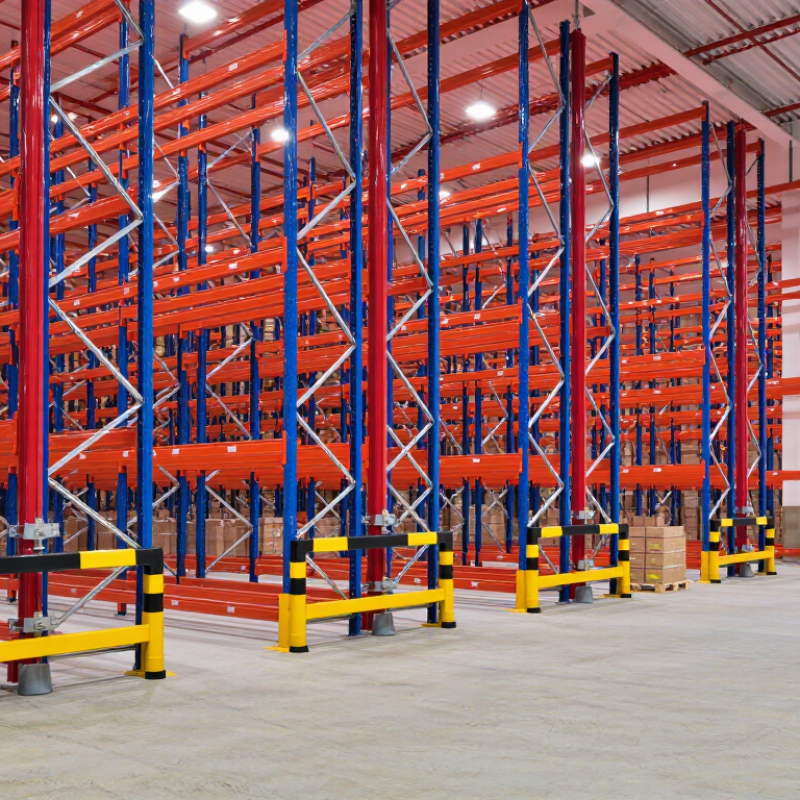
China Best Impact Racks for Global Buyers?

Define Impact-Rack Systems and Their Role in Palletized Warehousing

An impact-rack system is pallet storage designed to reduce damage from accidental contact in busy warehouse aisles. It uses load-bearing frames and beams, with protective features placed where forklifts are most likely to strike. These may include upright guards, aisle-end barriers, and reinforced frame components. The exact design depends on pallet weight, rack height, vehicle type, and traffic patterns.

In palletized warehousing, racks keep goods accessible while making vertical space useful. Impact protection helps preserve that storage structure and may reduce disruption after minor collisions. Picture a forklift turning with a pallet near an aisle end: a barrier can absorb contact before the vehicle reaches a rack upright. Still, no guard makes a rack collision-proof. Loads must be placed evenly, and damaged parts need prompt assessment by qualified personnel.

Good planning starts with the site, not a catalog. Measure aisle widths, check floor conditions, and confirm that anchors and rack components suit the intended loads. Look for bent uprights, loose connections, or chipped concrete during routine inspections. One detail is easy to miss: pallet overhang can expose goods and rack frames to impacts. Protection can help, but it cannot fix poor layout or rushed handling. Warehouses may need to adjust their setup after observing real traffic; that extra review is not always convenient, but it can reveal weak spots.

Compare Chinese Rack Designs Against EN 15512 Structural Design Rules

Chinese impact racks should be assessed by documented design assumptions, not appearance or load labels alone. EN 15512:2020 covers the structural design of adjustable pallet racking, including frame stability, member behavior, connections, and load combinations. Ask suppliers for calculations that identify steel grades, section properties, beam-to-upright connection data, and floor-anchor assumptions. Check the details.

Compare those calculations with the actual warehouse layout. A 2.4-metre bay, for example, behaves differently when beam levels, pallet loads, or aisle arrangements change. EN 15512 design checks account for imperfections and system behavior; a catalogue capacity figure cannot replace a project-specific assessment. Small gaps matter. In practice, unclear drawings or missing test evidence can slow independent review, even when the rack looks robust.

The 2024 MHI Annual Industry Report reported that 55% of surveyed supply-chain leaders planned to increase technology investment over the following two years. That figure measures investment intent, not rack safety, but it signals why storage systems increasingly need reliable data and traceable specifications. For global buyers, request calculation reports, component test evidence, installation tolerances, and inspection guidance, then have a competent engineer check them against the site conditions. One point deserves reflection: imported designs may use sound engineering, yet assumptions about slab strength, seismic forces, or operating clearances may not match the intended facility. Make those assumptions visible before procurement.

Assess Supplier Quality Through Steel Traceability, Weld Checks, and Load Tests

China Best Impact Racks for Global Buyers?
Assess Supplier Quality Through Steel Traceability, Weld Checks, and Load Tests

For impact-resistant racks, supplier claims need evidence. The World Steel Association’s World Steel in Figures 2024 reports 1,892.2 million tonnes of crude steel production in 2023. At that scale, batch-level records matter. Request mill test certificates showing heat numbers, steel grade, and thickness, then match them to delivered components. Check bundle labels before fabrication. A certificate is not a guarantee.

Weld quality needs physical checks. Ask for welding procedures, welder qualifications, and inspection logs. Review representative joints for visible cracks, undercut, and inconsistent weld size; request suitable non-destructive testing when specified. AWS D1.1/D1.1M covers structural steel welding, while ANSI MH16.1-2023 addresses the design, testing, and use of industrial steel storage racks. Load-test reports should identify the rack configuration, applied load, measured deflection, and residual deformation. Confirm equipment calibration and compare results with declared design values, not a generic pass stamp. For impact claims, test the actual frame or a documented equivalent, and check anchor and floor conditions. A clean lab result cannot reproduce every forklift strike.

China Impact Rack Supplier Quality: Example Audit Scorecard

Illustrative sample audit results—not an industry benchmark. Confirm requirements against the applicable standard and purchase specification.

How to read it: Scores summarize evidence reviewed in this example. Check steel certificates and heat-number links for traceability, inspect welds against the agreed acceptance criteria, and review documented load-test results for the specified rack configuration.

Match Rack Capacity to Pallet Loads, Beam Spans, and Forklift Operations

Impact-resistant pallet racks still need capacity matched to the actual pallet, not a catalog’s maximum figure. Record each loaded pallet’s weight, width, depth, and load type. A centered, evenly distributed load behaves differently from drums or cartons shifted toward one edge. Beam span matters too: longer spans can reduce allowable beam capacity. Check the rack supplier’s load tables for the exact beam length and configuration, then verify upright-frame capacity for the planned bay height and beam levels. Small details matter.

Forklift clearance is part of the design. Measure the truck’s turning radius, aisle width, fork length, and lift height against real operating routes. OSHA’s powered industrial truck guidance cites estimates of 85 forklift-related deaths and 34,900 serious injuries each year in the United States. These figures make clear that tight aisles and rushed turns are not minor planning issues. The Rack Manufacturers Institute’s ANSI MH16.1 specification also sets engineering requirements for steel storage racks; use qualified engineering review when layouts or loads fall outside standard tables. A spreadsheet can look precise and still miss pallet overhang, uneven floors, or impact exposure. Recheck those assumptions before ordering.

China Best Impact Racks for Global Buyers? - Match Rack Capacity to Pallet Loads, Beam Spans, and Forklift Operations

Use this planning guide to compare pallet loads, beam spans, and forklift requirements when specifying selective pallet racking with suitable impact protection.

Planning Scenario Load per Pallet Positions per Beam Level Minimum Load to Account for per Beam Level Example Beam Span Forklift and Aisle Planning Impact-Protection Consideration
Light-duty storage 1,000 lb (454 kg) 2 pallets 2,000 lb (907 kg) total pallet load 96 in (2,438 mm) Counterbalance forklift: a preliminary aisle allowance is often about 12–13 ft (3.7–4.0 m). Confirm using the truck’s turning data and the actual load. Consider column guards or end-of-aisle protection where trucks operate close to rack uprights.
Medium-duty storage 2,000 lb (907 kg) 2 pallets 4,000 lb (1,814 kg) total pallet load 108 in (2,743 mm) Reach truck: a preliminary aisle allowance is often about 9–10.5 ft (2.7–3.2 m). Check the truck model, pallet orientation, and working clearance. Protect exposed uprights and aisle ends; inspect rack components after any reported impact.
Heavy-duty storage 2,500 lb (1,134 kg) 2 pallets 5,000 lb (2,268 kg) total pallet load 120 in (3,048 mm) Counterbalance or reach truck: aisle width must be established from the selected truck’s turning radius, load dimensions, and required operating clearance. Specify protection based on traffic exposure and rack layout; guards must not obstruct safe pallet placement or reduce required clearances.
Narrow-aisle operation Set from the actual unit load Typically 2 pallets, subject to bay design Calculate from the total load stored on each beam level Choose the span to suit pallet width, overhang, and engineered beam capacity Turret or other very-narrow-aisle trucks may work in aisles around 5.5–6.5 ft (1.7–2.0 m), depending on equipment and operating method. Verify with the truck supplier. Coordinate rack protection, guide systems, floor tolerances, and truck clearances as one layout.

Important: The figures above are illustrative planning examples, not rack ratings or a substitute for structural design. The per-level totals assume two equally loaded pallet positions; actual beam, upright-frame, connector, anchorage, and floor capacities depend on the rack configuration, beam span, load distribution, height, seismic requirements, and site conditions. Obtain manufacturer-engineered ratings and have the layout checked against applicable local codes and standards before installation.

Plan Rack Protection and Expert Inspections at Intervals of No More Than 12 Months under EN 15635

China Best Impact Racks for Global Buyers?

Plan Rack Protection and Expert Inspections at Intervals of No More Than 12 Months under EN 15635

Impact protection helps reduce damage where forklifts turn, reverse, and load pallets. Yet guards do not make a rack immune to collisions. A bent upright, loose anchor, or cracked floor fixing can signal a problem that needs prompt attention. Small details matter. Staff should report visible damage quickly and keep the affected area safe while it is assessed. Waiting for the annual inspection may allow a minor impact to become a serious risk.

EN 15635 calls for an expert inspection of storage equipment at intervals of no more than 12 months, carried out by a technically competent person. Regular in-house checks also help identify new damage between these inspections; their frequency should reflect site conditions and use. Keep clear records of findings, locations, and repairs, rather than relying on memory. Record it. In practice, paperwork can lag behind busy warehouse work, and that gap deserves attention. A practical inspection plan links daily reporting, competent assessment, and timely corrective action. It also checks whether impact guards remain securely fixed and positioned to protect vulnerable rack uprights.

FAQS

What should buyers check when comparing rack designs?

Review documented calculations, not appearance or capacity labels alone. Check steel grades, section properties, connection data, and floor-anchor assumptions.

Why does the warehouse layout affect rack capacity?

Beam levels, bay height, aisle layout, and pallet loads change how a rack behaves. A 2.4-metre bay may need a different assessment when its configuration changes. Small gaps matter.

What information is needed to match rack capacity to pallet loads?

Record each loaded pallet’s weight, width, depth, and load type. A centered carton load differs from drums or boxes shifted toward one edge.

How do beam spans influence capacity?

Longer beam spans can reduce allowable capacity. Check load tables for the exact beam length and configuration, then confirm upright-frame capacity for the planned height and beam levels.

Which forklift details should be checked before installation?

Measure turning radius, aisle width, fork length, and lift height against actual routes. Pallet overhang and uneven floors are easy to overlook. Recheck them.

What documents can help an engineer review a rack design?

Request calculation reports, component test evidence, installation tolerances, and inspection guidance. A competent engineer should compare them with site conditions, including slab strength and operating clearances.

How often should an expert inspect storage racks?

EN 15635 calls for inspection by a technically competent person at intervals no longer than 12 months. In-house checks should also reflect site use and conditions.

What should staff do after noticing rack damage?

Report bent uprights, loose anchors, or damaged floor fixings promptly. Keep the affected area safe while it is assessed. Guards help, but they do not prevent every collision.

Why keep inspection and repair records?

Records show where damage occurred and whether repairs were completed. Warehouse paperwork can lag behind busy work; that gap deserves attention.

Conclusion

Impact Racks are designed to support palletized goods while helping warehouses use vertical space efficiently and maintain organized material flow. Choosing a suitable system involves more than comparing dimensions or price: buyers should consider structural design, load capacity, pallet size, beam span, and the way forklifts operate in the facility. Chinese rack designs can be assessed against the principles of EN 15512, with attention to the intended configuration and the documentation available for each system.

Supplier quality checks should include steel traceability, weld inspections, and appropriate load testing. After installation, protective measures can help reduce damage from daily operations, while regular inspections identify wear, deformation, or loose components before they become more serious concerns. A planned inspection program, including expert review at intervals of no more than 12 months in line with EN 15635 guidance, supports ongoing rack safety and performance. Pairing a verified design with suitable capacity planning and consistent maintenance helps buyers make informed decisions for their warehouse needs.

Ethan

Ethan

Ethan is a seasoned marketing professional with a deep expertise in our company's innovative product line. With a passion for sharing knowledge and insights, he takes the lead in regularly updating our corporate blog, where he explores industry trends, product features, and effective marketing......